





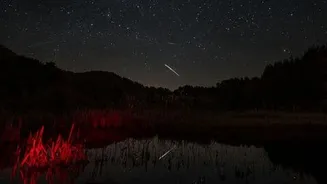

Cosmic Visitor Arrives
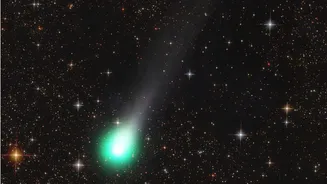
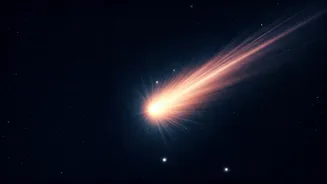
Prepare for an extraordinary astronomical event as a newly discovered comet, designated C/2025 R3 (Pan-STARRS), makes its appearance in the pre-dawn skies
over south India. This celestial wanderer, first identified on September 8, 2025, by the Pan-STARRS observatory in Hawaii, is believed to have embarked on a long journey from the mysterious Oort Cloud. The Oort Cloud is a vast, spherical shell of icy bodies situated at the extreme outer reaches of our solar system, acting as a reservoir for comets. Witnessing such an object offers a unique opportunity to observe material left over from the solar system's formation billions of years ago. This particular comet's path brings it close enough to be observed from Earth, presenting a rare chance for skygazers, especially in regions like south India, to connect with the distant cosmos.
Viewing the Comet
To successfully observe comet C/2025 R3, keen attention to timing and location is crucial. The optimal window for viewing this cosmic visitor is between 5:00 AM and 5:45 AM, just as the sun begins to illuminate the eastern horizon. It will appear low in the sky, so a clear, unobstructed view of the east is essential. Unfortunately, under typical conditions, the comet will not be bright enough for naked-eye observation. Therefore, utilizing a small telescope is highly recommended to enhance your viewing experience. Alternatively, modern smart imaging devices, such as the Seestar S50, can also be employed to capture clear images of this distant celestial object. The key is to have optical assistance to discern its faint glow against the brightening morning sky.
Brightness and Peak Visibility
Astronomers estimate that comet C/2025 R3 will exhibit a brightness ranging between a magnitude of three and five. While this magnitude theoretically allows for naked-eye visibility under exceptionally dark and clear skies, it's a challenging proposition. For a significantly enhanced and more detailed view, using binoculars is strongly advised. The comet's path will bring it closest to the Sun, an event known as perihelion, on April 19 and 20. During this period, it is anticipated to reach its peak brightness, making it the most opportune time for observation. However, even at its brightest, the success of your viewing will be greatly influenced by prevailing local weather conditions, such as cloud cover, and the clarity of your horizon. A combination of these factors will ultimately determine how well you can see this rare visitor.