




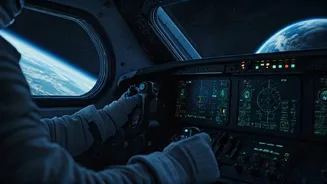
Eclipse From Orbit
The Artemis II mission has provided humanity with a remarkable new perspective on the phenomenon of a solar eclipse. Unlike the views experienced by observers
on Earth, astronauts aboard the Orion spacecraft captured the eclipse from a vantage point far above our planet. These images allow us to appreciate the dynamic interplay of the Sun, Moon, and Earth in a way that was previously unattainable. NASA has also drawn an intriguing comparison between how this recent eclipse was seen from space and the spectacle witnessed by millions on Earth a couple of years prior. This contrast highlights the different observational experiences and perhaps prompts contemplation on our place within the cosmos. It's a compelling visual dialogue about how we perceive and connect with cosmic events, whether from the familiar ground of our home planet or the innovative frontier of space exploration.
Lunar Far Side Unveiled
Beyond the dramatic eclipse imagery, Artemis II has also delivered stunning close-up views of the Moon's far side. This region, perpetually hidden from Earth's direct gaze, has been revealed in exquisite detail, showcasing intricate lunar craters with a clarity that evokes a sense of wonder. The photographs offer an unprecedented opportunity to study this mysterious terrain, bringing us closer to understanding the Moon's geological history and its formation. For so long, this side of our celestial neighbor has been a subject of speculation and imagination, but these new images translate that into tangible visual evidence. They serve as a powerful testament to the advancements in space exploration technology and NASA's ongoing commitment to pushing the boundaries of our knowledge about the solar system.
Mission Progress & Connection
The release of these extraordinary photographs from the Artemis II mission is more than just a showcase of spectacular visuals; it's a tangible indicator of the progress being made in NASA's ambitious lunar program. These images serve as compelling evidence that the mission is successfully advancing its objectives. Furthermore, NASA has actively engaged the public by posing a thought-provoking question: Would individuals prefer to witness an eclipse from the unique perspective of space, or as Artemis Astronaut Victor Glover eloquently put it, from our 'spaceship called Earth'? This interactive element underscores a profound message that moments of awe-inspiring cosmic events have a unique ability to unite people, fostering a shared sense of wonder and connection, regardless of their terrestrial or extraterrestrial viewing location.