




Understanding Blue Moons
The phrase "once in a blue moon" conjures images of extreme rarity, implying something that happens very infrequently. However, in astronomical terms,
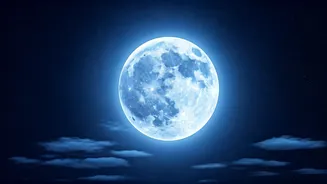
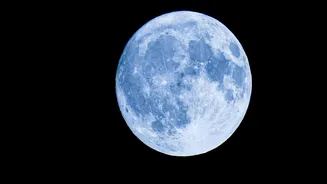
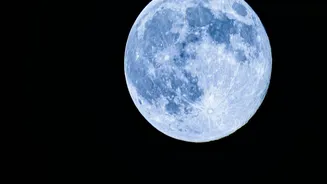
a blue moon is a recurring event, appearing roughly every two to three years. This phenomenon occurs when there are two full moons within a single calendar month. The next instance of this modern definition of a blue moon will grace us on May 31, 2026, marking a month with an extra full moon. While the name might suggest a change in the Moon's color, it's purely a designation based on our calendar system and the Moon's orbital cycle.
The Science Behind It
The occurrence of a blue moon is a direct result of the slight mismatch between the lunar cycle and the solar year. The Moon completes its orbit around Earth approximately every 29.5 days, which is the basis for a lunar month. Conversely, the Earth's journey around the Sun defines a solar year of about 365.25 days. Because these cycles don't perfectly synchronize, a small discrepancy emerges over time. This gap occasionally allows for a second full moon to fit within the boundaries of a single calendar month. The modern definition specifically identifies this second full moon as the 'blue moon'.
Etymology and Evolution
The terminology surrounding 'blue moons' has evolved over centuries. While the concept of something rare being called a 'blue moon' has ancient roots, the specific calendrical definition we use today gained prominence in 1946. This was largely due to an article by James Hugh Pruett, who, in his reading of older almanacs, misinterpreted the definition. He characterized a blue moon as the second full moon to appear within one calendar month. This interpretation proved highly influential and became the widely accepted modern definition. Astronomers also recognize a 'seasonal blue moon,' which occurs when an astronomical season, like summer or winter, contains four full moons instead of the usual three.
Upcoming Celestial Events
While the May 31, 2026, event will be a celebrated 'modern blue moon' due to being the second full moon in that month, it's worth noting other blue moon occurrences. For instance, the next 'seasonal blue moon,' which pertains to the number of full moons within an astronomical season, is slated for May 20, 2027. It's important to reiterate that the 'blue' in blue moon is a metaphorical term derived from its infrequent occurrence within our calendar framework, not an indication of the Moon's actual hue. The Moon can, however, appear bluish under very specific atmospheric conditions, such as after volcanic eruptions that scatter light.