






Double Launch Success
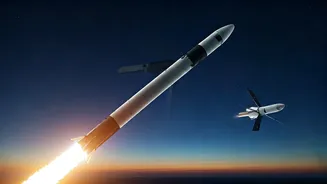
In a demonstration of its operational prowess, SpaceX executed a swift dual launch campaign, deploying two powerful Falcon 9 rockets in quick succession.
The first launch originated from Florida, followed closely by another from California, with less than a day separating these significant missions. These coordinated efforts were primarily focused on expanding the Starlink satellite internet constellation, successfully placing 54 new satellites into their designated orbits. This rapid pace of deployment highlights SpaceX's consistent progress in building out its global internet service and its ability to manage complex launch schedules with precision and efficiency, keeping their ambitious project on track.
Starlink Network Growth
With the recent addition of these 54 satellites, the expansive Starlink network has now surpassed a monumental milestone, comprising over 10,200 operational satellites. This growth is critical for providing widespread internet access across the globe. The successful deployment of these satellites ensures the continued expansion and enhancement of the network's capabilities, offering improved connectivity to more users. This achievement is a testament to the ongoing efforts in space technology and the commitment to bridging the digital divide through innovative satellite-based internet solutions, making a significant impact on global connectivity.
Reusable Rockets Land
Underscoring SpaceX's dedication to sustainable space exploration, both of the Falcon 9 first-stage boosters used in these missions executed flawless landings. One booster touched down precisely on the autonomous drone ship named 'Just Read the Instructions,' while the other safely returned to the 'Of Course I Still Love You' vessel. These successful recoveries are vital to SpaceX's reusable rocket technology, significantly reducing the cost of space launches and enabling more frequent access to orbit. This consistent ability to recover and reuse rocket components is a cornerstone of their strategy for making space travel more accessible and environmentally responsible for future endeavors.