




Unleashing Unprecedented Speed
Imagine a spacecraft that can process information and make decisions almost instantaneously, a stark contrast to the current limitations. NASA has achieved
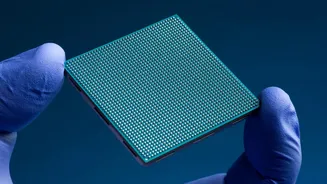
this monumental leap with a newly unveiled processor that operates a staggering 500 times faster than the technology currently empowering our explorers in space. This revolutionary chip underwent a foundational test, successfully transmitting a simple 'Hello Universe' message back to Earth, demonstrating its remarkable capabilities. This dramatic increase in processing power means future missions will possess a far greater degree of autonomy, allowing them to think and react independently in real-time. Furthermore, the enhanced data handling capacity will enable scientists to sift through vast amounts of information more efficiently, potentially leading to quicker groundbreaking discoveries and a deeper understanding of the cosmos. This advancement is not just an incremental upgrade; it signifies a fundamental shift in what our spacecraft can achieve and how quickly we can learn from their journeys.
Engineered for the Extreme
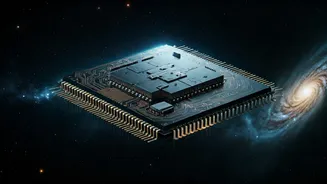
Developed in collaboration with Microchip Technology, this cutting-edge processor is not merely about raw speed; it's a marvel of engineering designed to withstand the unforgiving environment of space. Functioning as a sophisticated system-on-a-chip (SoC), it ingeniously integrates multiple essential components – central processing units (CPUs), memory storage, and networking capabilities – into a single, compact unit. This consolidation reduces complexity and enhances reliability. Crucially, this SoC is purpose-built to endure the extreme temperature fluctuations and the high levels of radiation prevalent in space, conditions that would cripple conventional electronics. NASA's esteemed Jet Propulsion Laboratory is subjecting this advanced processor to rigorous and extensive testing protocols. These stringent trials are meticulously designed to simulate and validate its performance under the actual, demanding conditions expected during real-world space missions, ensuring its resilience and operational integrity when deployed far from Earth.
Transforming Space Missions
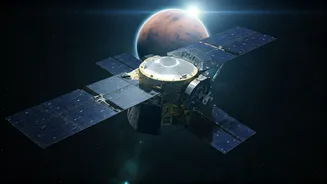
The implications of this supercharged processor are profound and far-reaching, set to dramatically enhance the operational scope and scientific output of a wide array of space missions. Orbiters circling distant planets will gain the ability to conduct more complex analyses on-site, reducing the need for constant communication with Earth and accelerating the pace of observation. Rovers navigating alien landscapes will become significantly more intelligent, capable of identifying interesting geological features, planning optimal routes, and responding to unforeseen challenges with enhanced autonomy. Even future crewed habitats located in the deep reaches of space will benefit immensely, with improved life support systems and research capabilities. As Jim Butler, the project manager, eloquently stated, this development marks an 'exciting time' for hardware engineers, paving the way for NASA's 'next giant leaps' in space exploration. In essence, this technological leap promises not only faster scientific breakthroughs but also the potential for uncovering unexpected and astonishing revelations from the universe around us.