




Antarctic Eclipse Unveiled
Mark your calendars for February 17, 2026, as the frozen continent of Antarctica is set to be the focal point of a truly rare astronomical event: an annular
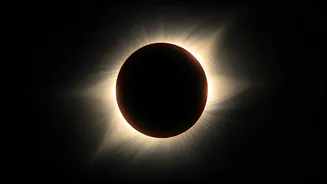
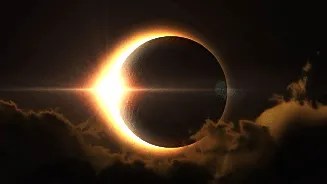
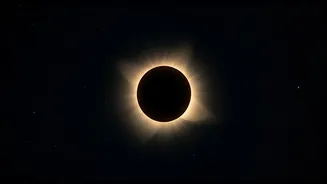
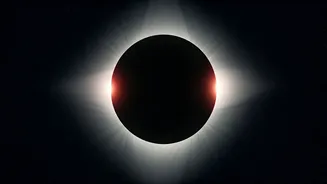
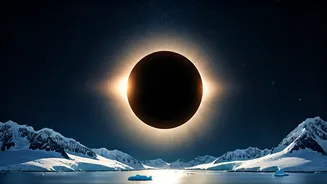
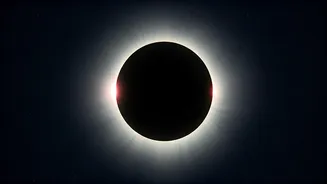
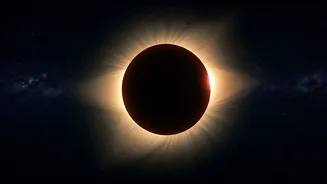
solar eclipse. This spectacular phenomenon, often referred to as a 'ring of fire' due to the visible incandescent halo of the sun surrounding the moon's silhouette, will trace a path across the southernmost landmass. While the complete annular phase is exclusive to Antarctica, a select few inhabited research stations are poised to offer firsthand accounts of this celestial performance. For those not on the continent, significant partial views will grace the skies of southern South America, southeastern Africa, and Madagascar, as well as surrounding oceanic regions, offering a chance for many to witness a captivating celestial alignment.
Timing and Visibility
The celestial ballet commences its journey on February 17, 2026, at 09:57 UTC, initiating its cosmic dance near the South American continent. The pinnacle of the eclipse, the annularity where the sun transforms into a luminous ring, is scheduled to reach central Antarctica at 11:44 UTC. The spectacle will reach its zenith around 12:13 UTC, offering approximately two minutes of this breathtaking 'ring of fire' formation. The entire path of annularity spans an impressive distance of over 4,000 kilometers before it gracefully fades into the vast expanse of the southern Indian Ocean, concluding its visible journey around 12:41 UTC. This specific timing and path ensure that the most dramatic views are reserved for the pristine Antarctic landscape.
Research Stations Witness
Several key research outposts located within Antarctica will have the distinct privilege of witnessing the full annular solar eclipse. For instance, the Concordia research station is positioned to observe over two minutes of the 'ring of fire' phenomenon, appearing low on its southwestern horizon. Similarly, Russia's Mirny Station is directly within the eclipse's path, guaranteeing an exceptional viewing experience. Other nearby research stations will also be privy to varying degrees of partial solar coverage, allowing scientists and personnel stationed there to observe this rare astronomical occurrence. The remote and pristine environment of these stations offers an unparalleled backdrop for such a significant celestial event.
Safe Viewing Practices
Whether you are fortunate enough to be in Antarctica or are keen to follow this extraordinary event remotely, adhering to safe viewing practices is paramount. It is crucial to utilize certified eclipse glasses or specialized solar filters; standard sunglasses are entirely inadequate for protecting your eyes from the sun's intense rays during any phase of a solar eclipse. For precise local timings tailored to specific viewing locations, resources like Timeanddate.com are invaluable. Fortunately, the eclipse is slated to occur during the Antarctic summer, a season typically characterized by clearer skies, which should contribute to favorable viewing conditions for this remarkable 'ring of fire' spectacle.