






A Towering Achievement
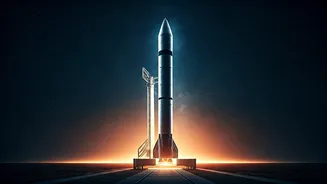
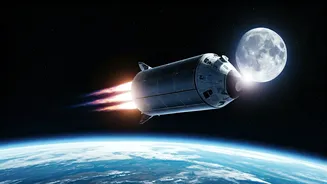
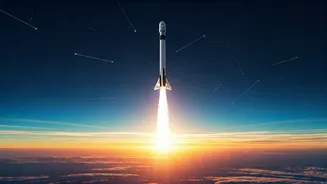
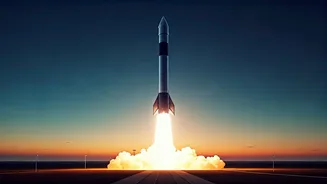
SpaceX is gearing up for a monumental event: the maiden orbital flight of its newest rocket, the Starship V3. Standing an impressive 124.4 meters tall,
this iteration is SpaceX's most ambitious yet. Elon Musk has indicated that Flight 12, featuring Booster 19 paired with Ship 39, is mere weeks away from liftoff. This colossal spacecraft represents a significant stride in the company's efforts to achieve routine and robust access to space, pushing the boundaries of what's possible in rocketry design and engineering. The sheer scale of Starship V3 underscores the advancements made in creating a vehicle capable of reaching Earth's orbit and beyond, setting the stage for future missions.
Unmatched Power and Capacity
Beyond its imposing stature, Starship V3 is engineered for extraordinary performance, capable of transporting over 100 metric tons to low Earth orbit. At its heart lie the new Raptor 3 engines, a groundbreaking development that nearly doubles the thrust of previous models while simultaneously reducing both weight and manufacturing costs. This efficiency boost is crucial for SpaceX's vision of making space travel more accessible and sustainable. The enhanced thrust and lighter construction of these engines contribute significantly to the rocket's overall capability, allowing for more substantial payloads and deeper space missions. This leap in engine technology is fundamental to unlocking the full potential of the Starship program.
Super Heavy Enhancements
The Super Heavy booster, the lower stage of Starship V3, has undergone substantial modifications to enhance its resilience and performance. A key innovation is the integration of a hot-stage ring, facilitating a cleaner separation process. For atmospheric control and re-entry, the booster now features only three larger grid fins, a streamlined approach designed for efficient maneuvering. Furthermore, structural reinforcements have been implemented throughout the booster to ensure it can withstand the immense forces of launch and descent. Following a testing setback last year that caused delays, Booster 19 has been rigorously prepared. It is now mounted on Pad 2 and has successfully completed critical cryogenic tests, paving the way for prelaunch testing with its powerful Raptor 3 engines.
Preparation for Flight
Complementing the booster's readiness, Ship 39, the upper stage of Starship V3, has also completed its crucial qualification phases. Early March saw the successful conclusion of its cryogenic and qualification tests, confirming its structural integrity and operational readiness for the demanding conditions of spaceflight. This dual preparation, with both Booster 19 and Ship 39 meeting their respective milestones, signifies that the Starship V3 system is nearing a state of complete operational readiness. SpaceX is simultaneously advancing its infrastructure, preparing to activate a second launch pad and tower at Starbase, a move essential for increasing launch cadence and achieving their goal of fully reusable rocket systems.