






Venus and Moon Unite
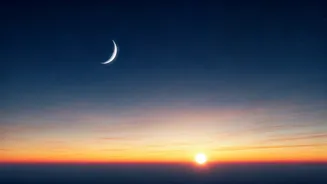
Prepare yourself for a truly captivating celestial display as the slender sliver of the moon graces the western horizon alongside the exceptionally bright
planet Venus. This enchanting conjunction will be readily visible to the naked eye, requiring no special equipment. Simply direct your gaze towards the west approximately 30 to 45 minutes after the sun has dipped below the horizon. You'll notice the moon positioned just above Venus, creating a stunning visual that even city dwellers can appreciate. For the most unobstructed view, seek out a location with a clear, unobstructed view of the western sky and horizon. Venus, in particular, will shine with remarkable intensity, easily distinguishing itself as the most prominent 'star-like' object in the evening sky. This breathtaking pairing not only offers a beautiful sight but also heralds the beginning of astronomical spring in the Northern Hemisphere, coinciding with the vernal equinox which occurs on March 20th at 2:46pm UTC, a time when day and night are nearly equal in length across the globe.
Moon's Weekend Journey
The celestial ballet doesn't end with tonight's spectacular pairing. As the weekend unfolds, observe the moon's mesmerizing ascent higher into the night sky each successive evening. On Saturday, March 21st, the moon will find itself positioned between the radiant Venus below and the planet Jupiter ascending above it. By Sunday, March 22nd, the moon will embark on another enchanting transit, drawing close to the famous Pleiades star cluster, a breathtaking assembly of stars often referred to as the Seven Sisters. Shortly thereafter, it will continue its graceful drift, passing near the planet Jupiter once more and then moving into the vicinity of Gemini, the constellation known for its iconic twin stars, Castor and Pollux. Each night offers a new perspective on our celestial neighbor as it traverses its orbital path, interacting with other planets and prominent star formations.