







AI Communication is Key
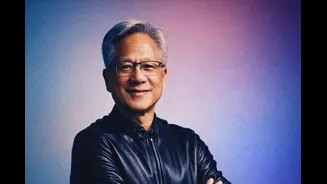
In today's rapidly evolving technological landscape, NVIDIA's CEO, Jensen Huang, suggests a significant shift in educational priorities for students. He
posits that while traditional coding skills remain valuable, the ability to effectively 'talk' to artificial intelligence is emerging as a paramount competency. Huang describes this interaction not merely as inputting commands, but as a form of artistry—the skill of formulating precise questions and iteratively refining them to elicit the most insightful and useful responses from AI systems. This nuanced approach to AI engagement is what truly unlocks the immense power and potential of these advanced technologies, moving beyond basic functionality to strategic collaboration. Embracing this skill set is presented as a critical step for individuals preparing to enter the workforce.
Future Job Readiness
Jensen Huang foresees a future where proficiency in communicating with AI will be indispensable across a broad spectrum of professional fields, including fields like medicine, law, and engineering. He cautions that the quality of AI output is directly proportional to the quality of the input; vague or poorly constructed prompts will inevitably lead to uninspired or unsatisfactory results. As industries increasingly integrate tools powered by generative AI and sophisticated digital twins, those who possess the capability to collaborate seamlessly with these intelligent systems will gain a distinct advantage. This ability to guide and shape AI interactions will become a defining factor in professional success, setting individuals apart in an AI-driven job market. Therefore, developing this 'AI fluency' is now as important as mastering foundational technical skills.
Coding Meets Conversation
Jensen Huang's core message to aspiring professionals is clear: while the importance of coding as a foundational skill is undeniable, the ability to adeptly converse with and steer artificial intelligence is rapidly ascending in significance. He argues that the capacity to articulate one's needs, refine queries, and engage in a dialogue with AI is fast becoming a crucial element for anyone looking to thrive in the modern workforce. This is particularly true as AI technologies become more integrated into everyday professional tools and workflows. Learning to effectively prompt and interact with AI systems empowers individuals to leverage these tools to their fullest potential, driving innovation and efficiency. It's a complementary skill that amplifies the impact of traditional technical expertise.