


Global Phenomenon Unveiled
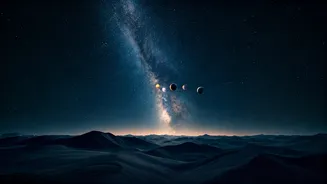
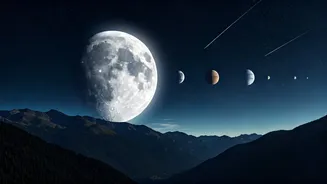
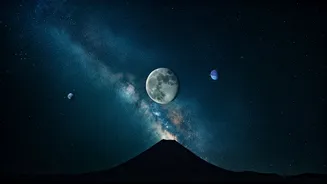
The occurrence of the Moon, Saturn, and Neptune aligning in the night sky represents a worldwide event, providing a shared experience for individuals across
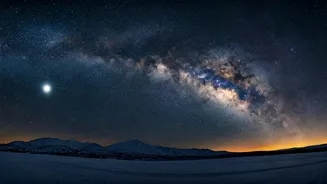
the globe. This alignment isn't just a simple observation; it's a convergence of cosmic proportions. The celestial bodies come together, creating a visual display easily observed from various locations, provided that the weather conditions cooperate. Such an event signifies a moment of unity, with countless individuals pausing to admire the beauty of the cosmos. The rarity of the conjunction amplifies its allure, making it a topic of conversation and interest across communities. The worldwide aspect of this event highlights the shared wonder that astronomy inspires, connecting people across borders and cultures through the simple act of looking up at the sky.
Identifying Celestial Bodies
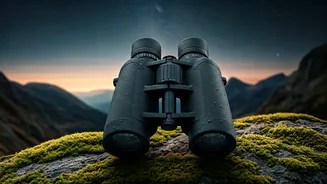
To fully appreciate the alignment, understanding how to locate each celestial body is crucial. The Moon will be the most easily identifiable, appearing as a bright, familiar presence in the night sky. Saturn, slightly dimmer, can be found by its characteristic yellowish hue. Neptune, being much fainter and farther away, presents more of a challenge. Telescopes and high-powered binoculars are usually needed to observe Neptune; however, its position can be determined by knowing its location relative to Saturn and the Moon. A dark, clear sky away from city lights will offer the best conditions for viewing, as light pollution can obscure fainter objects. Furthermore, understanding the time of the event is key: consult astronomical resources or apps to pinpoint the exact time and direction, enhancing the viewing experience and maximizing the chance of seeing all three celestial bodies.
Enhancing Your Viewing
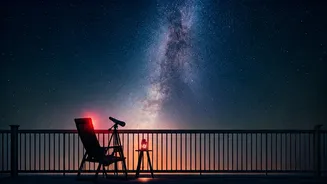
To heighten your viewing experience, several approaches can be adopted. Firstly, seek out a location with minimal light pollution and an unobstructed view of the horizon. This could be a park, a rural area, or even a rooftop, contingent upon your location. Secondly, utilize tools such as binoculars or a telescope. While the Moon and Saturn may be visible to the naked eye under ideal conditions, these instruments will significantly enhance the observation of Neptune, revealing more of its details. Thirdly, plan ahead: research the exact time of the conjunction and note the direction in which to look for the alignment. Finally, be patient and allow your eyes to adapt to the darkness, which can take up to 20 minutes. Consider bringing a comfortable chair and some warm clothing as stargazing can be a lengthy and often chilly endeavor. The goal is to create a serene and optimal viewing environment, maximizing the enjoyment of the celestial display.