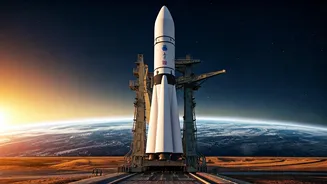







Rollout's Grand Debut
The Artemis II rocket's grand debut marked a monumental occasion. It was a clear indication of a significant advancement in the Artemis program and the preparation
for the upcoming mission to the Moon. The rollout itself, a visually striking spectacle, represented the culmination of years of hard work, engineering prowess, and unwavering dedication from numerous teams involved in the project. The event generated excitement and enthusiasm among space enthusiasts, scientists, and the public alike, as it was a tangible demonstration of the strides made towards a crewed lunar mission. This also signified the readiness of the hardware and associated systems for the challenging journey ahead, as well as the beginning of the crucial pre-launch preparations, including various tests and inspections, all aimed at ensuring the safety and success of the mission. The Artemis II rollout wasn't just a technical achievement; it was a powerful symbol of humanity's continuous quest to explore the cosmos and push the boundaries of space exploration.
Mission's Historical Significance
The Artemis II mission is poised to be an incredibly historic event. It's the first crewed mission to the Moon in over five decades and has profound significance. This mission serves as a critical stepping stone in NASA's broader Artemis program, which aims to establish a sustainable presence on the lunar surface. It will facilitate the development of advanced technologies necessary for future deep space exploration, including crewed missions to Mars. From a scientific perspective, the mission provides researchers with a chance to conduct important experiments and gather valuable data about the lunar environment, enhancing our understanding of planetary science and the origin of our solar system. The successful completion of the Artemis II mission would showcase international collaboration, as NASA partners with various space agencies worldwide, thereby fostering unity in the global space community. Furthermore, the Artemis program aims to inspire the next generation of scientists and engineers, encouraging them to pursue careers in space exploration, thereby sustaining the innovation cycle.
Preparing for Launch
The rollout of the Artemis II rocket marked the beginning of a crucial phase of pre-launch preparations. After its movement out of the Vehicle Assembly Building (VAB), the rocket underwent several tests and inspections to ensure it was completely ready for its upcoming mission. These tests include rigorous checks of all the rocket's systems, like propulsion, guidance, and life support, to identify any potential issues before the launch. Teams meticulously check the entire hardware, from the engines to the crew capsule, assessing their performance. Fueling tests are conducted, simulating the process of loading the rocket with propellants to assess how the systems react and guarantee that there are no leaks or malfunctions. Additionally, the launch team fine-tunes all procedures and protocols to ensure smooth operations. The crew prepares for their journey by undergoing intensive training, becoming acquainted with every aspect of the mission. They practice simulations, familiarizing themselves with potential scenarios and how to respond to emergencies. Furthermore, the launch team continues to assess the weather conditions, making sure that it is safe to proceed and that they meet all safety regulations. This thorough preparation phase is critical for the success of the Artemis II mission and ensuring the safety of the crew.
Future Space Exploration
The Artemis II mission plays a crucial role in shaping the future of space exploration. It's a stepping stone toward establishing a sustainable human presence on the Moon and sets the stage for future, more ambitious missions. The experience and data gathered from this mission will contribute to developing advanced technologies and spacecraft, supporting upcoming exploration endeavors. The Artemis program paves the way for future human missions to Mars, as the Moon serves as a testing ground for critical systems and operational procedures that will be essential for the Mars missions. The data gathered from the lunar environment will help scientists understand the geological and environmental aspects of the Moon and how it can be utilized for research and resource utilization. Additionally, the Artemis program offers several opportunities for international collaboration. By partnering with different space agencies, like the Indian Space Research Organisation (ISRO), it promotes unity and strengthens the global space exploration community. The future of space exploration is very promising, with the Artemis II mission serving as a catalyst for new discoveries, inventions, and aspirations.