



Another Cosmic Delivery
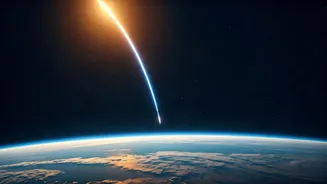
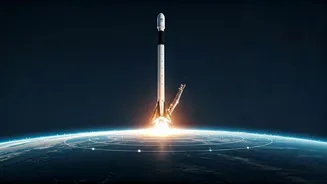
On March 30, 2026, a Falcon 9 rocket, operated by SpaceX, embarked on its Transporter-16 mission, lifting off from Vandenberg in California. This particular
flight was a significant undertaking, carrying a remarkable manifest of 119 distinct payloads. These payloads, ranging from compact cubesats to larger microsatellites, were precisely placed into a sun-synchronous orbit. This mission further underscored the company's relentless pace in space launches, marking their 21st launch from the Vandenberg facility within that year alone, demonstrating an unwavering commitment to expanding access to space.
Pioneering Space Tech
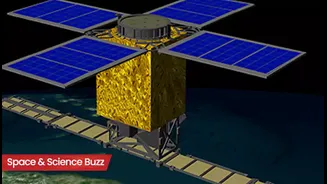
The Transporter-16 mission served as a platform for a wide array of innovative technologies originating from more than 20 different nations. Among the noteworthy payloads were the NGA's MagQuest CubeSats, specifically designed to enhance our understanding of Earth's magnetic field. This improved mapping capability is crucial for advancing navigation systems and scientific research. Additionally, the mission carried SPOQC, a payload dedicated to testing secure quantum communication protocols in the challenging environment of space. The successful return and landing of the Falcon 9 booster after its mission was another testament to the viability and cost-effectiveness of reusable rocket technology, making space exploration more accessible.