







A Celestial Visitor Approaches
Astronomers are buzzing with anticipation for the arrival of Comet C/2025 R3, a celestial traveler first detected by the Pan-STARRS observatory in Hawaii
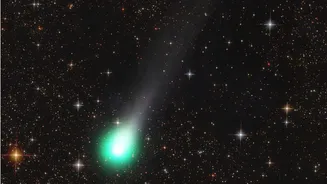
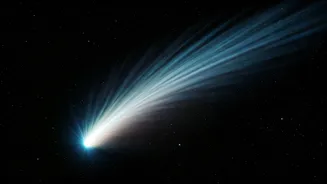
last September. This icy wanderer is on a trajectory that promises to bring it close enough to Earth and the Sun in April 2026 to become a prominent sight. Its journey may originate from the distant Oort Cloud, a vast reservoir of icy bodies located at the outermost fringes of our solar system, making this an exceptionally rare opportunity to observe an object from such an ancient and remote region. As it nears its closest approach to our planet, the comet's brightness is expected to increase significantly, potentially reaching a level visible to the unaided eye, especially for observers in the Northern Hemisphere who will have the advantage of early morning viewing.
Optimal Viewing Conditions
For those eager to catch a glimpse of Comet C/2025 R3, April 2026 presents the prime opportunity. The most favorable viewing times will be in the pre-dawn hours, particularly around the middle of the month, when the comet is expected to be at its brightest. Skywatchers should direct their gaze towards the eastern horizon, searching the constellations of Pegasus and Pisces. The comet's closest encounter with Earth is slated for April 27, when it will pass at a distance of approximately 44 million miles. While Northern Hemisphere residents will enjoy pre-dawn views, observers in the Southern Hemisphere will find opportunities to spot the comet in the evening sky during May. For an even more enhanced experience, a pair of binoculars or a small telescope will undoubtedly reveal more detail and beauty, transforming a good sighting into a spectacular one.