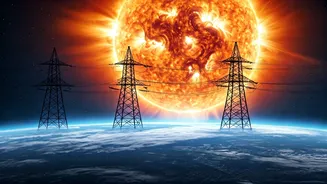








Catastrophic Grid Impact
Scientists warn that an exceptionally powerful solar storm, occurring perhaps once every 100 to 200 years, poses a significant threat to the technological
backbone of our modern world. For India, this could translate into widespread power outages as the national electricity grids grapple with immense surges and potential damage to crucial transformers. The ramifications of such an event aren't just temporary; experts caution that repairing and restoring full grid capacity could take months, or even years, profoundly affecting daily life and economic stability. The UK's Science and Technology Facilities Council highlights that these rare cosmic events carry substantial consequences that are often underestimated. This scenario underscores our deep reliance on robust energy infrastructure and the vulnerability it presents to extreme space weather phenomena.
Disruption to Space Technology
Beyond power grids, severe solar storms have the potential to wreak havoc on the satellites that underpin much of our daily technological convenience. For India, this includes disruptions to essential services like GPS, weather forecasting, and navigation applications that we rely on for everything from commuting to disaster management. A stark reminder of this vulnerability occurred in 2022 when a solar flare caused as many as 40 Starlink satellites to plummet back to Earth's atmosphere shortly after their launch. Solar flares can interfere with radio communications, while the accompanying geomagnetic storms can degrade satellite navigation and communication links for extended periods, sometimes lasting several days. These events serve as a critical reminder of how deeply intertwined our modern lives have become with space-based technologies.