




Fusion Power Unleashed
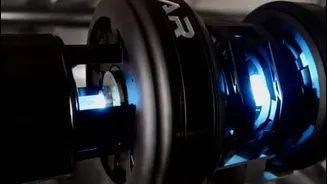
A significant advancement has been made in the realm of space propulsion, with Pulsar Fusion, a UK-based startup, successfully completing the inaugural
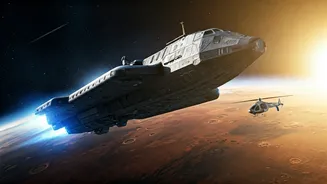
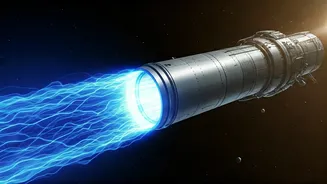
plasma test of its Sunbird exhaust system. This critical step is a testament to their ambition of harnessing nuclear fusion to power spacecraft. The implications for space travel are profound, particularly for missions to Mars. Current journeys can span up to 10 months, but this new technology has the potential to dramatically reduce that duration, bringing travel times down to a mere under 6 months. This breakthrough signifies a pivotal moment in making interplanetary travel more efficient and accessible.
Sunbird's Momentous Test
The pivotal plasma test of the Sunbird exhaust system was not just a private affair; it was showcased live at Amazon's MARS Conference. This public demonstration served to validate the core principles behind the Dual Direct Fusion Drive engine. This innovative engine is designed to be vastly more powerful than conventional rocket systems, capable of generating approximately 2 megawatts of power. Although the Sunbird test unit itself is not intended to transport astronauts or cargo, its success is crucial for proving the propulsion technology that will drive future spacecraft. A real-world demonstration in orbit is already slated for 2027, signaling that the era of fusion-powered spaceflight might be closer than we think.