





The Sharper Orbit Risk
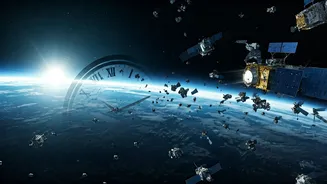
Scientists have introduced a novel concept, termed the 'CRASH Clock,' that significantly alters our understanding of satellite collision risks. Previously,
it was estimated that a communication breakdown with a satellite, perhaps due to a geomagnetic storm, could lead to a collision within approximately 164 days. However, this new model suggests a far more immediate danger, indicating that a catastrophic collision could occur in as little as 2.8 days under similar circumstances. This dramatic reduction in the perceived safety margin highlights a more urgent need for robust space traffic management and mitigation strategies, as the window for corrective action has been drastically narrowed.
Booming Satellite Numbers
The number of satellites actively circling our planet has experienced an explosive growth. As of May 2025, over 11,700 active satellites were in orbit, representing a staggering 485% increase since 2018. This rapid expansion is largely driven by the deployment of massive satellite constellations, such as Starlink, which alone consists of thousands of spacecraft. The sheer volume of these objects in orbit means that potential near-misses are becoming commonplace, with services like Starlink reportedly navigating potential collisions every couple of minutes. This escalating density in Earth's orbital pathways amplifies the probability of accidental impacts and the generation of hazardous space debris.
Impacts on Earth Systems
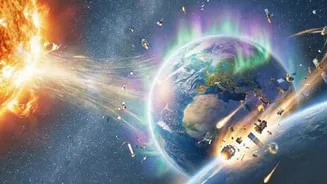
The proliferation of satellites and the heightened risk of collisions pose a significant threat to essential services we rely on daily. The potential for accidents in orbit could lead to a cascade of debris, making space increasingly unusable. Such a scenario could severely disrupt or even disable critical systems like Global Positioning System (GPS) navigation, which underpins everything from transportation and logistics to precision agriculture. Furthermore, widespread internet connectivity, increasingly provided by satellite networks, could also face disruptions. The ramifications extend to weather forecasting, scientific research, and national security, underscoring the vital importance of maintaining a safe and sustainable space environment.