





Launch Schedule Shuffle
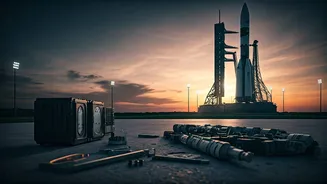
The Indian Space Research Organisation (ISRO) had envisioned a robust slate of seven significant space missions slated for completion by March 2026. However,
this ambitious timeline has encountered substantial revisions, with only a single mission successfully launched thus far. The remaining six, including critical launches like PSLV C62 and GSLV-F17, are now experiencing delays. This shift means that ISRO's initially packed agenda for the coming year is undergoing a significant re-evaluation, requiring adjustments to its strategic planning and operational sequencing to accommodate these unforeseen postponements.
Navigation System Hiccups
India's indigenous navigation satellite system, NavIC, has faced a technical setback with the atomic clock on the IRNSS-1F satellite ceasing to function. This issue reduces the number of NavIC satellites currently equipped with operational atomic clocks to just three. Atomic clocks are fundamental to the precise timing required for accurate satellite navigation, and their malfunction can impact the overall performance and reliability of the system. While this presents a challenge, ISRO is likely to be working on solutions to restore or replace the faulty component and ensure the continued integrity of the NavIC constellation.
Progress and Partnerships
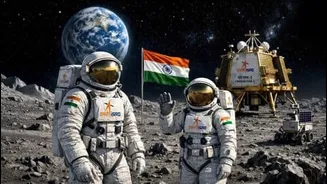
Despite the launch schedule adjustments and technical challenges, ISRO continues to make significant strides in other critical areas. The agency recently celebrated a successful engine test for its Gaganyaan program, India's pioneering human spaceflight mission, marking a crucial step towards sending astronauts into space. Furthermore, ISRO is deepening its involvement in space medicine through a collaboration with AIIMS, aiming to understand the physiological effects of space travel. Demonstrating a commitment to global cooperation, ISRO has also entered into a new agreement with the European Space Agency (ESA) to enhance Earth observation capabilities, underscoring that international partnerships remain a vital component of its long-term vision.