





A New Era of Power
Prepare for an unprecedented leap in space exploration capabilities, as NASA engineers are diligently crafting a revolutionary nuclear battery engineered
to sustain spacecraft operations for an astounding 433 years. This remarkable feat far surpasses the endurance of current power systems, which typically rely on plutonium-238 and have a functional lifespan of around 88 years due to its decay rate. The primary impetus behind this development is the ambition to venture into the deepest reaches of space, far beyond the sun's feeble rays where conventional solar panels become utterly ineffective. This long-duration power source is envisioned to propel probes and scientific instruments on missions that will enable us to explore distant planets, moons, and other celestial bodies with a sustained presence, unlocking secrets of the universe that have remained beyond our grasp until now.
Am-241 and Stirling's Synergy
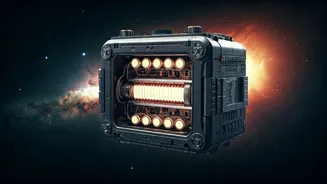
At the heart of this pioneering energy solution lies a sophisticated interplay between americium-241 and advanced Stirling converters, a collaboration forged with the expertise of institutions like the University of Leicester and prominent US laboratories such as Oak Ridge. The fundamental principle involves harnessing the persistent energy released from the radioactive decay of americium-241, a process that, when managed, generates a consistent flow of electricity. This energy is then efficiently converted by robust Stirling engines, known for their reliability and longevity. While the initial power output of this new battery may be comparable to existing technologies, its unparalleled lifespan is the true game-changer, paving the way for unprecedented interstellar journeys and the potential discovery of new worlds previously confined to the realm of imagination.