






Local AI Power
Google's DeepMind has unveiled Gemma 4, a significant leap forward in open-source artificial intelligence. This advanced large language model is now freely
available under the Apache 2.0 license, a departure from previous, more restricted terms. Unlike its subscription-based counterpart, Gemini, Gemma is designed to be downloaded and run directly on your own hardware, offering unparalleled control and cost-effectiveness. This localized approach is particularly revolutionary for organizations handling sensitive information. For instance, healthcare institutions grappling with strict patient data privacy regulations can now harness the benefits of AI without the risk of data breaches or compliance issues, as the entire AI operation remains within their secure network. This ensures cutting-edge AI capabilities are accessible while upholding the highest standards of confidentiality.
Device Flexibility
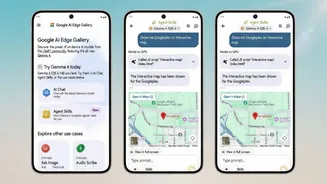
The versatility of Gemma 4 is a standout feature, allowing it to operate across an impressive spectrum of devices. From the smartphones in our pockets to the intricate network of IoT and edge devices, Gemma 4 thrives even with limited or no internet connectivity. This adaptability makes it an ideal candidate for a wide array of applications. Imagine a scenario where Gemini powers your everyday chatbot interactions, but Gemma 4 is deployed on a compact device like a Raspberry Pi to meticulously monitor industrial processes in real-time. This on-site deployment eliminates cloud latency, ensuring immediate feedback and control, which is crucial for time-sensitive operations. The ability to run sophisticated AI locally on such diverse hardware unlocks innovative solutions across various sectors.
Licensing Evolution
A crucial aspect of Gemma 4's release is its updated licensing under Apache 2.0. This move signifies Google's commitment to broader adoption and innovation within the AI community. Previously, Gemma models operated under a specific Gemma Terms of Use statement. While these terms did permit local usage and modifications, they came with limitations, restricting deployment to approved use cases and placing constraints on redistribution. The adoption of the Apache 2.0 license, a widely recognized and permissive open-source license, grants developers and users significantly more freedom to utilize, modify, and distribute the model, fostering a more collaborative and open ecosystem for AI development and application.
Model Variants
Gemma 4 isn't a single entity but rather a comprehensive set of four distinct models, meticulously engineered for different operational needs. For demanding server environments, two robust models, 26B and 31B, boast substantial parameter counts, enabling them to handle complex tasks. Complementing these are the E2B and E4B models, specifically optimized for resource-constrained mobile and IoT devices, ensuring efficiency and performance where it matters most. All four variations are equipped with advanced capabilities, including sophisticated reasoning, support for agentic workflows, and robust security features mirroring those found in Google's proprietary AI systems. Furthermore, they offer offline code generation, native support for variable-resolution video and image processing, and impressive speech recognition and understanding functionalities, especially in the E2B and E4B models.