



Launched into Space
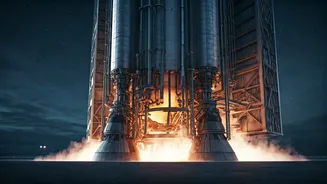
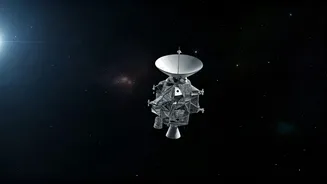
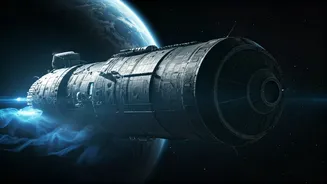
Voyager 1, a probe launched way back in 1977, has been on an extraordinary adventure. It was designed to examine Jupiter and Saturn, accomplishing this
in grand style and giving us unprecedented insight into these giant planets. The mission's scope soon expanded. The probe has continued its voyage outward into interstellar space. The goal of this mission was to study the outer solar system, but now Voyager 1 is venturing into a realm beyond our own system. Its longevity and the data it keeps sending back is a testament to the skill and the vision of the scientists and engineers who conceived and built it.
A Light-Day's Journey
The term 'light-day' describes a huge distance: it's how far light travels in one day. Light is the fastest thing in the universe. Voyager 1 is now so distant that it will soon be about a light-day from Earth. That translates to an enormous distance of approximately 24 billion kilometers! At this incredible separation, any signal to Voyager 1 takes around a day to make its way to the probe. Communicating with Voyager 1 has become an extreme test of patience, and every piece of information we receive is a valuable record of its ongoing trip.
Beyond Our Solar System
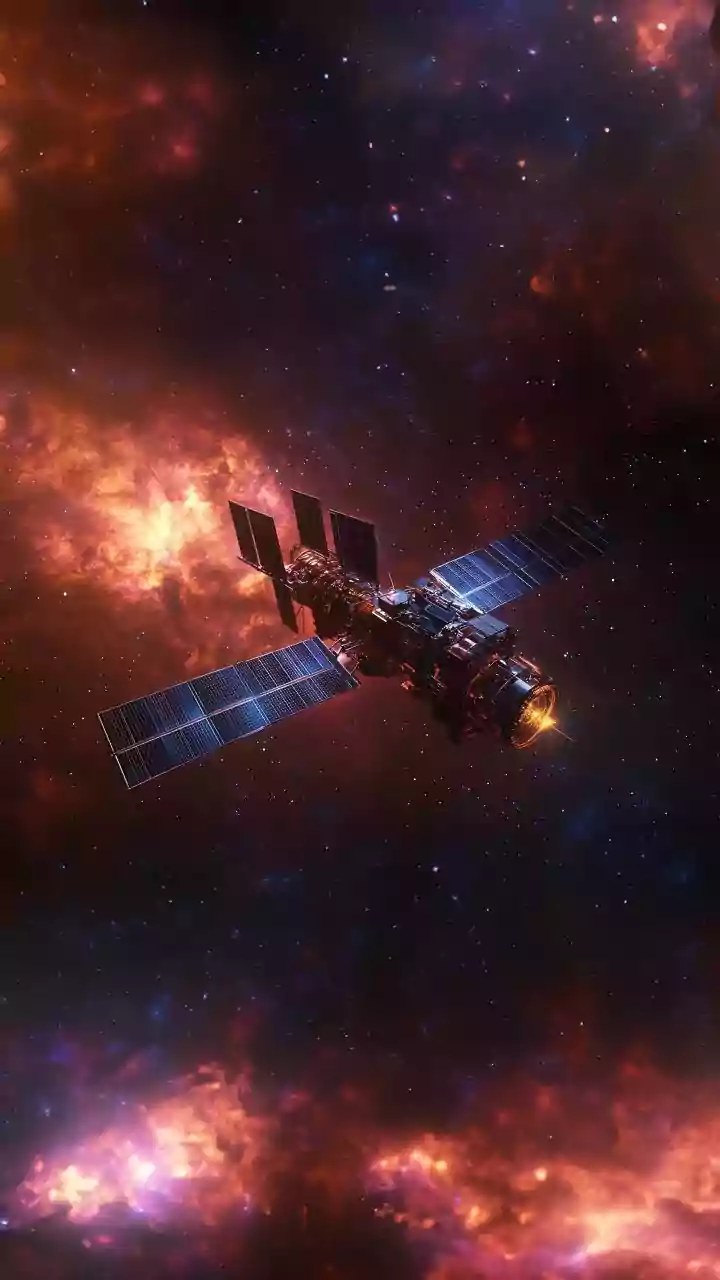
Voyager 1 has already broken free of the solar system's grip, becoming the first spacecraft to enter interstellar space. This milestone, which happened in 2012, was a historic leap for humanity. It means Voyager 1 has stepped into the space between stars, an area filled with cosmic rays, interstellar gas, and plasma. Its instruments are designed to probe this unknown territory, giving us important details regarding the conditions and the nature of interstellar space. Voyager 1 transmits the data back to Earth, allowing scientists to study the universe's most distant regions.
The Significance of Distance
The vast distance that Voyager 1 has reached is a reminder of the scale of the cosmos. It emphasizes the extraordinary achievements of space travel. The fact that we can send a spacecraft on such a lengthy and successful journey, and still keep in touch, is a true feat. The distance also presents several technological challenges, including signal delay and the need for reliable energy sources. This pushes the limits of engineering and communications. Furthermore, it underlines the importance of international collaborations in space exploration, as diverse teams work together to ensure the success of this and future missions.
Future of Voyager 1
As Voyager 1 travels further, its mission is not over. Its instruments keep gathering essential data concerning the environment around it. The probe still holds the potential for future discoveries about the interstellar medium and the far reaches of our galaxy. The probe is powered by radioisotope thermoelectric generators (RTGs). These convert the heat generated from the decay of radioactive material into electricity. However, the RTGs are gradually losing power. Its instruments are likely to be shut down one by one to preserve energy for the most important functions. Even when its science instruments cease to function, Voyager 1 will keep traveling through space, a testament to humanity's quest for discovery.