






Speedy Speech, Sharp Mind
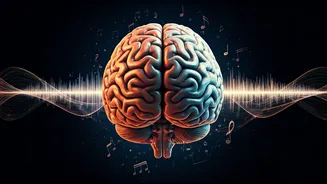
New research suggests that the speed at which we articulate our words could be a surprising indicator of how efficiently our brains are functioning. Scientists
have observed a correlation where individuals who speak at a quicker pace often exhibit better performance on tasks designed to measure executive functions and other cognitive abilities. Conversely, a noticeable slowdown in speech might be an early signal of potential cognitive decline, even before more apparent memory issues arise. This finding stems from a study involving 125 participants ranging from 18 to 90 years old, who were tasked with describing visual scenes and identifying objects while encountering distracting auditory stimuli. The analysis indicated that speaking velocity was a more significant predictor of an individual's ability to name items and manage their thought processes than the frequency of verbal pauses or fillers like 'uh' and 'um'. Notably, older participants in the study tended to speak at a slower rate and incorporated more such interjections.
Slower Speech Signals
The connection between speech patterns and brain health is becoming increasingly clear, with findings suggesting that a deceleration in overall talking speed may indeed reflect underlying changes within the brain's intricate network. This latest research aligns with other contemporary studies that have identified a link between slower speech delivery, extended pauses, and the nascent stages of neurodegenerative conditions. The lead author of this study highlighted that modifications in general speaking pace could be a reflection of neurological shifts. The ability to monitor aspects of our speech, such as the rhythm, tempo, or characteristic voice patterns, holds promise for earlier detection of cognitive health concerns. This could empower individuals to seek assistance and intervention sooner, potentially leading to better outcomes and management of brain-related issues.