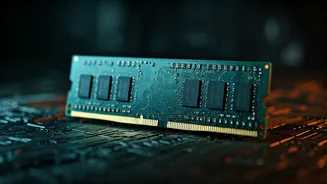








A Widespread Scarcity
The world is grappling with a significant deficit in Random Access Memory (RAM) chips, a fundamental component indispensable for the operation of modern
electronics like smartphones and computers. Projections indicate that this scarcity will not be resolved quickly. According to Nikkei Asia's analysis, even with accelerated production initiatives from key suppliers, the manufacturing capacity will only be able to satisfy approximately 60% of the global demand by the conclusion of 2027. Adding to this concern, the chairman of South Korea's SK Group has voiced a stark warning, suggesting that these supply chain disruptions could unfortunately persist as far as the year 2030, impacting technology availability for an extended period.
Industry Ramps Up Production
Leading global memory chip manufacturers, including industry giants such as Samsung, SK Hynix, and Micron, are actively engaged in efforts to expand their manufacturing capabilities and boost output. However, the tangible effects of these production increases are unlikely to manifest in the market before 2027 or even 2028. SK Hynix has indeed brought a new fabrication facility online in Cheongju earlier this year; however, this singular development represents the sole anticipated increase in overall production capacity among these three major companies for the year 2026, highlighting the gradual nature of their response to the surging demand.
Demand Outpaces Supply
Nikkei Asia's research indicates that to effectively bridge the gap and meet the rapidly escalating demand for RAM chips, production would need to see a substantial yearly increase of 12% throughout 2026 and 2027. Regrettably, current plans suggest a less ambitious growth rate, with Counterpoint Research estimating only a 7.5% increase during this critical period. Furthermore, the new fabrication facilities currently being established are primarily slated to concentrate on the production of High-Bandwidth Memory (HBM), a specialized type of RAM crucial for powering artificial intelligence data centers, rather than general-purpose DRAM for everyday consumer devices.
Consumer Electronics Impact
Given the strategic decision by manufacturers to prioritize the production of HBM over the more common DRAM utilized in personal computers and mobile phones, it remains uncertain how significantly these new production lines will alleviate the financial strain on consumer electronics. The existing RAM shortage has already triggered noticeable price increases across a diverse array of electronic devices. Consumers have experienced escalating costs for everything from smartphones and laptops to virtual reality headsets and portable gaming consoles, a trend that is likely to continue as long as the supply-demand imbalance persists.