








AI's Sleep Revolution
Artificial intelligence is fundamentally changing how we understand and track our sleep. Gone are the days of bulky, expensive equipment; modern mobile
applications now leverage sophisticated AI algorithms to analyze a wealth of data directly from your smartphone. These tools meticulously examine metrics like your brain waves, heart rate, breathing patterns, and even subtle body movements throughout the night. By processing this information, they offer deep insights into your various sleep cycles, from light slumber to deep rest and REM phases. More remarkably, some applications can even flag potential sleep disorders, such as sleep apnea, by interpreting the data captured by your phone's sensors or through integrated APIs. The primary goal is to provide users with personalized recommendations, enabling them to make informed adjustments to their daily routines and sleep environments, ultimately leading to significantly enhanced sleep quality and overall health.
Sound-Based Sleep Analysis
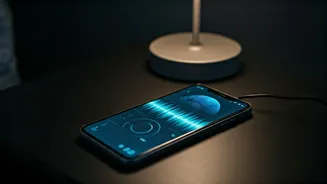
One notable advancement in AI-driven sleep tracking comes from applications like Sleep Cycle, which harnesses the power of sound analysis. This technology functions by listening to your breathing sounds, captured via your iPhone's microphone, to detect potential sleep disruptions or anomalies. With an impressive track record of over three billion analyses performed, Sleep Cycle offers tailored habit recommendations powered by its patented sound recognition technology. In a significant development in 2025, the app introduced clinically validated AI-based screening for sleep apnea, with the expectation of full U.S. validation by September 2026. This demonstrates a commitment to not only tracking sleep but also to contributing to early detection and management of serious sleep-related health issues, all through readily available smartphone technology.
Motion and Audio Detection
Another innovative approach is adopted by Sleep.ai, which utilizes its Sleep Sense API to create an extensive sleep analysis ecosystem. This system accurately identifies sleep and wake boundaries by interpreting signals from your smartphone, including motion and audio cues. A key benefit of this method is its ability to eliminate the need for wearable devices, making sleep tracking more accessible and comfortable. Sleep.ai seamlessly integrates into existing health applications, delivering real-time sleep data and actionable recommendations. By tapping into the world's most substantial sleep dataset, it empowers wellness product developers to build more robust and personalized user experiences, underpinned by scientifically validated insights derived from extensive sleep research.
Predictive Clinical Insights
For those seeking clinical-grade sleep analysis, integrating advanced models like Stanford's SleepFM offers predictive insights derived from an immense dataset. This model has analyzed nearly 600,000 hours of polysomnography data from over 65,000 participants. SleepFM excels in accurately classifying different sleep stages and assessing the severity of sleep apnea. Beyond diagnostics, it can predict risks for over 100 different health conditions based on just a single night's sleep data. While primarily developed for research, its capabilities are beginning to influence consumer applications by providing automated scoring that rivals expert analysis, paving the way for more sophisticated sleep health management tools for the general public.
Rapid Scoring Innovation
Addressing the time-consuming nature of traditional sleep study analysis, EnsoData has developed an FDA-cleared AI technology that dramatically accelerates the scoring process. This groundbreaking innovation can analyze sleep studies in mere minutes, transforming what once took hours into a swift and efficient evaluation. This leap in speed significantly enhances the accessibility of thorough sleep assessments, ensuring that users receive detailed and accurate insights into their sleeping habits without compromising on quality. By leveraging advanced AI, EnsoData makes in-depth understanding of sleep patterns more attainable for individuals seeking to improve their rest through cutting-edge technology.