




The "Sameness" Dilemma
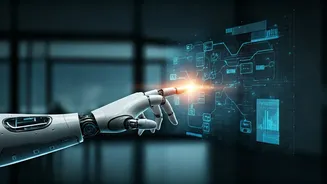
A noticeable trend is emerging within the realm of artificial intelligence-generated content: a pervasive sense of uniformity. Whether it's visuals or other
forms of media, critics and even prominent figures within the tech industry are pointing out that much of what AI produces shares an uncanny resemblance. This lack of distinctiveness is raising questions about the true creative potential of AI and its impact on originality. For instance, in the gaming world, a new feature designed to enhance graphics has drawn criticism for contributing to this visual sameness, with some users lamenting that the generated images appear too alike and detached from reality, earning it dismissive labels from the community.
Artist's Tool, Not Replacement
Despite these concerns, the intention behind many AI tools, such as the aforementioned graphics enhancement feature, is to serve as a powerful assistant for human artists. The aim is to empower creators by providing them with sophisticated capabilities that can augment their work, making it easier and quicker to achieve stunning visual results. Proponents argue that these AI systems are not designed to supplant the artist's vision but rather to amplify it, offering new avenues for expression and efficiency. The underlying philosophy is that AI should function as a collaborative partner, a digital brush that allows artists to explore more ambitious concepts without sacrificing their unique artistic control or creative direction, thereby maintaining the human element central to the art.
Debating AI's Artistic Control
The debate surrounding AI's role in creative processes often circles back to the degree of control developers and artists truly possess when integrating these technologies. A point of contention arises when considering the underlying mechanisms of some AI tools. For example, it has been noted that certain advanced AI features operate primarily by analyzing two-dimensional image data. This technical detail fuels ongoing discussions about the extent to which human creators can genuinely steer the output of AI systems, especially within complex fields like game development. The question lingers: how much autonomy does a developer retain when relying on AI that processes information in specific, potentially limiting, ways, and does this reliance inadvertently steer the creative outcome towards a predictable, uniform aesthetic?