






The Orbiting Server Dilemma
The idea of vast data centers floating in the vacuum of space, ready to power advanced AI, sounds like science fiction come to life. However, AWS CEO Matt
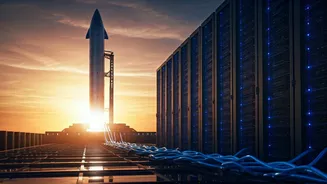
Garman has recently brought a dose of pragmatism to this futuristic vision, stating that such concepts are "pretty far from that." His primary concern revolves around the sheer economics and logistics of sending server equipment into orbit. Launching heavy payloads, which server racks certainly are, incurs astronomical costs. The current global capacity for rocket launches is simply insufficient to support the massive undertaking of establishing even a modest constellation of space-based data centers. The sheer volume of launches required would strain existing infrastructure and drive costs even higher, making it an economically unviable proposition for the foreseeable future. It's not just about getting the hardware there; it's about doing so repeatedly and affordably, a challenge that remains largely unaddressed.
Practical Space Constraints
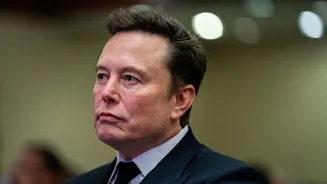
Beyond the immense cost of rocket launches, Garman highlights fundamental practical limitations that make space-based data centers a distant prospect. Unlike terrestrial data centers that benefit from existing infrastructure, space offers no such conveniences. There are no readily available buildings for housing servers, nor are there established methods for maintenance and cooling in a vacuum. The weight of server racks, designed for terrestrial environments, becomes a significant impediment in space. Furthermore, the challenges of servicing and upgrading equipment in orbit are considerably more complex and expensive than on Earth. Initiatives like Elon Musk's vision for off-world AI power and Google's Project Suncatcher, which aims to test solar-powered satellite racks by 2027, point towards forward-thinking ambition. However, Garman's perspective underscores that overcoming these foundational engineering and logistical hurdles is paramount before such grand ambitions can materialize.
AWS's Grounded Infrastructure
Matt Garman, as the CEO of AWS, brings a wealth of experience and a uniquely grounded perspective to the discussion of data center infrastructure. Having spent nearly two decades at Amazon, he now presides over an empire of over 900 data centers worldwide. This extensive, hands-on experience with managing and scaling massive physical data center operations provides him with unparalleled insight into the complexities and costs involved. His view is shaped by the reality of maintaining and expanding a global network of facilities that are physically accessible and upgradable. Therefore, his skepticism towards space-based data centers is not a dismissal of innovation, but rather a reflection of the current technological and economic realities that govern large-scale computing infrastructure. The immense scale of AWS's current operations, built on Earth, naturally leads to a cautious and pragmatic approach when considering far-reaching extraterrestrial solutions.