






Lunar Orbit & Distances
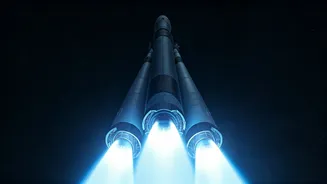
The Artemis II mission, scheduled to commence between April 1st and April 10th, 2026, represents a significant leap forward in human spaceflight capabilities.
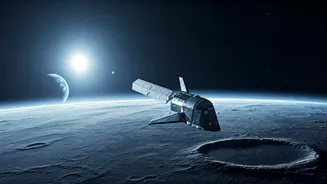
During this approximately 10-day endeavor, the Orion spacecraft, carrying its crew, will embark on an extraordinary trajectory that takes them further from Earth's Moon than any human has ventured before. Specifically, the mission aims to reach an astonishing altitude of 9656 kilometers above the lunar surface. The flight plan involves two initial orbits around our planet to gain momentum before Orion gracefully enters a unique figure-eight path around the Moon. This intricate orbital maneuver is designed not only to showcase the spacecraft's agility but also to thoroughly evaluate its performance in deep space conditions, setting the stage for more ambitious lunar and interplanetary expeditions in the future.
Survival Systems Focus
A paramount objective of the Artemis II mission revolves around the rigorous testing of the Orion spacecraft's critical life support systems, particularly the advanced crew survival suits. These specialized suits are engineered to provide astronauts with a six-day breathable atmosphere in the unlikely event of an emergency where the primary environmental control systems fail. The mission will meticulously assess the functionality and reliability of these suits under the extreme conditions of deep space. This includes monitoring oxygen levels, carbon dioxide removal, and thermal regulation to ensure that astronauts can remain safe and secure for an extended period. The success of these tests is fundamental to building confidence in the safety protocols for future long-duration missions, where immediate terrestrial support is not an option.
Re-entry & Recovery
As the Artemis II mission nears its conclusion, a crucial test will be performed involving the Orion capsule's re-entry sequence. Before returning to Earth, the spacecraft will jettison its service module, a critical step to isolate the crew capsule for atmospheric entry. This maneuver is specifically designed to allow NASA to evaluate the performance of Orion's heat shield. Addressing previous concerns, this test is vital to confirm its integrity and ability to withstand the immense temperatures generated as the capsule hurtles through Earth's atmosphere at high velocity. Following the heat shield test, Orion will deploy a series of parachutes to significantly reduce its speed before splashing down in the Pacific Ocean. A joint operation involving NASA and the U.S. Navy will be on standby to efficiently and safely recover the crew and the spacecraft, marking the successful completion of another significant milestone towards returning humans to the Moon.