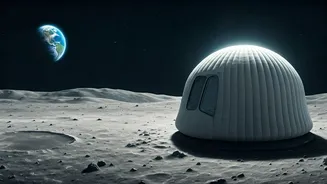








Moon Base Vision
The dream of establishing a permanent human presence on the Moon is taking a significant leap forward, with ambitious plans suggesting that key components
of a lunar base could be functional as early as 2028. This forward-thinking approach hinges on the development and deployment of advanced inflatable habitat technology. Instead of traditional, rigid structures, these innovative habitats are designed to be compact during transit and then expand significantly once they reach the lunar surface. This expansion capability is crucial for creating substantial living and working spaces, moving beyond the era of brief exploratory missions to one of sustained habitation. The ultimate goal is to transition from mere visits to a genuine, long-term settlement, fostering deeper scientific research and the potential for future lunar activities. This technological shift represents a paradigm change in how we envision our presence beyond Earth, prioritizing adaptability and scalability for the challenges of extraterrestrial living.
Inflatable Technology Advantage
At the forefront of this lunar development are innovative inflatable habitats, a technology poised to revolutionize the construction of extraterrestrial outposts. These unique structures offer a significant advantage over conventional building methods in space. Their primary benefit lies in their efficient use of space during launch; they can be compressed into a much smaller volume for transport. Upon arrival at their destination, such as the Moon, these habitats are designed to inflate and expand, creating a considerably larger internal volume. This expansion capability is vital for accommodating the necessary living quarters, laboratories, and operational facilities required for a long-term lunar base. Furthermore, the scalability of this technology allows for the modular growth of a base, meaning more habitats can be added over time as needs evolve. This flexibility is paramount for establishing a sustainable and expandable presence on the lunar surface, making the ambitious 2028 operational timeline a tangible possibility.
Partnerships for Progress
The realization of a lunar base by 2028 is being propelled by strategic collaborations between forward-thinking organizations. A key partnership involves a company teaming up with Max Space, an entity specifically focused on developing the essential scalable infrastructure for sustained extraterrestrial living. The CEO of Max Space has emphasized the critical importance of building infrastructure that can grow and adapt to the demands of long-term stays on the Moon. This collaborative effort aligns perfectly with broader governmental objectives, such as NASA's current initiatives aimed at establishing a lunar presence. Such ambitious projects often garner support from government funding, which can provide the necessary financial backing to accelerate development and deployment. By joining forces and aligning their visions, these entities are collectively working towards overcoming the engineering and logistical hurdles, paving the way for a future where humans can not only visit but truly live and work on the Moon.