



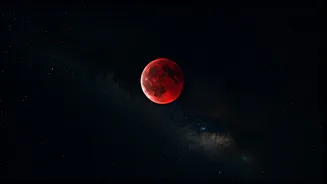
The 'Blood Moon' Explained
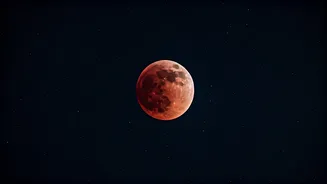
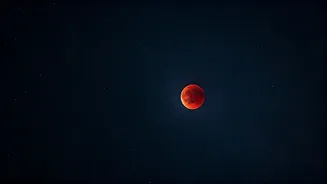
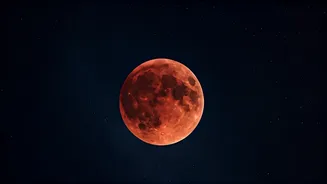
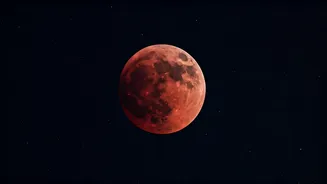
On March 3, 2026, the cosmos will present a total lunar eclipse, a truly captivating event commonly referred to as a 'Blood Moon.' This natural marvel
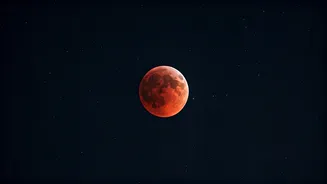
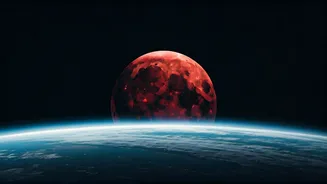
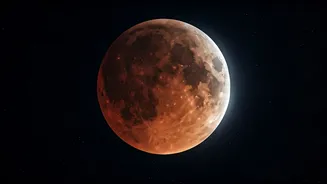
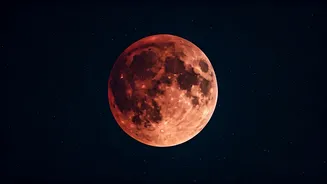
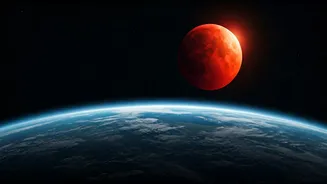
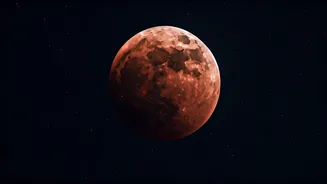
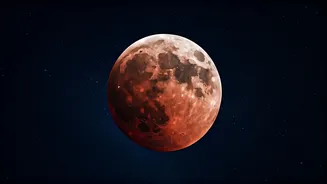
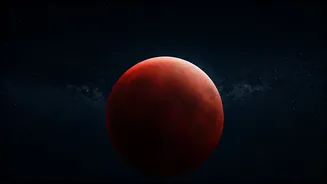
occurs when our planet, Earth, positions itself precisely between the Sun and the Moon. In this alignment, Earth effectively obstructs the direct path of sunlight that would typically illuminate the lunar surface. Consequently, the only illumination reaching the Moon is the light that has been filtered and dispersed through Earth's atmosphere. It is this atmospheric filtering process that imparts the Moon with its distinctive, deep reddish hue during the peak of totality, transforming it into a 'Blood Moon' for observers across the globe.
Viewing the Eclipse
Mark your calendars for March 3, 2026, as a total lunar eclipse will be a dazzling spectacle visible across vast regions, including significant portions of Asia, Australia, North America, and parts of South America. The exact timing of the Moon's entry into Earth's shadow will vary based on your geographical location and local time. Unlike the intense solar eclipses that necessitate specialized protective eyewear, lunar eclipses are perfectly safe to behold with the naked eye. However, for an even more immersive experience and to discern finer details on the Moon's surface, consider using binoculars or a telescope to amplify your viewing pleasure.
Eclipse Mechanics Unveiled
A total lunar eclipse is a precise celestial ballet where the Sun, Earth, and Moon achieve a perfect, straight-line alignment, with Earth precisely situated in the middle. This grand alignment results in Earth casting its shadow directly onto the Moon. The most intense and darkest part of this shadow is known as the umbra. When the Moon traverses through this umbral region, it appears to transform into a deep, captivating red – the signature 'Blood Moon' effect. This breathtaking phenomenon can be observed from any location on Earth where the Moon is visible above the horizon at the time of the eclipse.
The Red Hue's Origin
The striking crimson coloration of the Moon during a total lunar eclipse is a direct consequence of Earth's atmosphere acting as a natural filter. As sunlight journeys through our planet's atmospheric layers on its way to the Moon, the shorter, bluer wavelengths of light are scattered more extensively than the longer, redder wavelengths. This physical process is remarkably similar to why we observe vibrant red and orange hues during sunsets and sunrises. When the Sun is low on the horizon, its light must travel through a greater thickness of atmosphere, leading to the scattering of blue light and the dominance of red light reaching our eyes.
Cultural and Community Aspects
Throughout history, total lunar eclipses have held a profound fascination for humanity, captivating diverse cultures for millennia. The upcoming March 3, 2026, eclipse holds particular significance for India, as it coincides with the vibrant Holi festival, undoubtedly amplifying local intrigue and anticipation for this astronomical event. Such celestial occurrences provide exceptional opportunities for organized public stargazing events and communal astronomy gatherings. Their inherent safety for naked-eye viewing makes them incredibly accessible, serving as an ideal and engaging introduction to the fundamental principles of our solar system for people of all ages.