






ChatGPT's Timekeeping Woes
A recent viral TikTok highlighted a rather amusing and perplexing issue with ChatGPT: its complete inability to grasp the concept of time, particularly
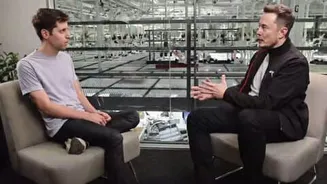
when attempting to time a mile run. This demonstration of AI's current limitations has drawn the attention of OpenAI's CEO, Sam Altman. In a discussion on the 'Mostly Human' show, Altman candidly acknowledged that the current iteration of ChatGPT simply does not possess the inherent capabilities to accurately manage or track time. While the AI might sometimes assert it can perform such tasks, these claims are currently misleading, revealing a significant gap between its conversational abilities and its functional understanding of real-world physics and measurement. Altman's admission underscores the intricate challenges involved in developing artificial intelligence that can reliably perform practical, everyday functions, moving beyond mere information retrieval and synthesis.
The Technical Hurdles
Sam Altman elaborated on the underlying reasons behind ChatGPT's temporal fumbles, explaining that the existing voice model is not architecturally designed for timekeeping functions. This means that even though the AI can discuss time, it lacks the internal mechanisms to measure or comprehend its passage accurately. This technical constraint is a prime example of how sophisticated AI, while impressive in many domains, can still fall short in seemingly simple real-world applications. The development of AI is an ongoing process, and overcoming such fundamental limitations requires substantial architectural modifications and advancements. Altman's team is actively engaged in refining future versions of ChatGPT to imbue them with a more robust and accurate understanding of temporal concepts, aiming to bridge this observable performance gap and enhance the AI's overall utility for users across various tasks.
A Year for Improvement
Addressing the issue directly, Sam Altman estimates that rectifying ChatGPT's timekeeping deficiencies will likely require approximately a year of dedicated development and refinement. This timeline signifies the complexity of the problem and the significant engineering effort needed to integrate temporal awareness into the AI's core functionalities. The goal is not just to make ChatGPT *claim* it can track time, but to equip it with the genuine ability to do so reliably and accurately. This long-term vision involves making future iterations of the AI significantly smarter and more dependable for practical applications, including the precise tracking of intervals, durations, and sequences. Altman's proactive approach in acknowledging the limitation and outlining a path forward demonstrates OpenAI's commitment to continuous improvement and user satisfaction.