







Antarctic Ring of Fire
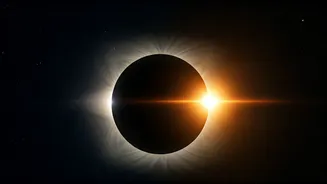
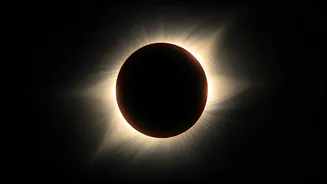
Mark your calendars for a truly remarkable astronomical event scheduled for February 17, 2026. This date marks the occurrence of an annular solar eclipse,
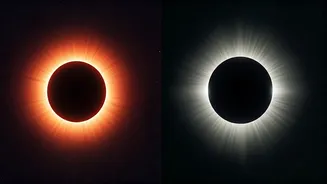
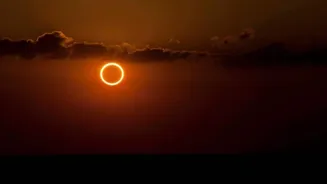
a phenomenon where the Moon appears smaller than the Sun, framing it with a brilliant halo often referred to as a 'ring of fire'. The prime viewing location for this spectacular display will be across western Antarctica, offering an unparalleled celestial spectacle. While the most dramatic views are reserved for the icy continent, observers in the southern reaches of South America, the southeastern parts of Africa including the island nation of Madagascar, and various oceanic regions will have the opportunity to witness a partial solar eclipse. This means the Sun will be at least partially obscured by the Moon, providing a fascinating, albeit less complete, view of the cosmic alignment.
Timing and Visibility
The cosmic dance of the solar eclipse on February 17, 2026, will commence its observable journey starting at approximately 09:57 UTC, with initial visibility near the South American continent. The highlight of the event, the full 'ring of fire' or annularity, will reach its zenith in central Antarctica at 11:44 UTC. The absolute peak moment, when the lunar disk will obscure the largest portion of the solar sphere, is slated for 12:13 UTC. This extraordinary phase of maximum coverage is expected to last for a little over two minutes, offering a fleeting yet unforgettable glimpse of the sun's corona. For those fortunate enough to be stationed in Antarctica, the Concordia and Mirny research stations are perfectly positioned to offer front-row seats to the full annularity, experiencing the event in its most complete and awe-inspiring form.
Safe Viewing Practices
Witnessing a solar eclipse is an incredible experience, but it's paramount to prioritize eye safety throughout the event. Direct, unfiltered viewing of the sun, even during an eclipse, can cause severe and permanent eye damage, including blindness. To ensure a safe and enjoyable experience, it is strongly recommended to use specialized ISO-certified eclipse glasses. These glasses are designed to block the harmful rays of the sun, allowing you to observe the eclipse without risk. Alternatively, you can create a simple yet effective pinhole projector. This can be as straightforward as using a colander to project an image of the sun onto a surface, or by creating a small hole in a piece of cardboard to cast a projection. These DIY methods offer a secure way to witness the celestial phenomenon while safeguarding your precious eyesight.