









The Lunar Mission Beckons
Artemis II marks a crucial step in NASA's ambitious plan to return humans to the Moon and beyond. The opening of the launch window on February 6th signals
the start of this exciting mission. The primary goal is to send a crew of astronauts on a lunar flyby, demonstrating the capabilities of the Orion spacecraft and the Space Launch System (SLS) rocket. This mission will lay the groundwork for future Artemis missions, which will include landing humans on the lunar surface. It represents a significant step towards long-term human presence in deep space and scientific exploration of the Moon. The success of Artemis II is vital for the continued development of the Artemis program, and it will set a benchmark for future missions that will delve deeper into the solar system.
Orion: The Crew's Home
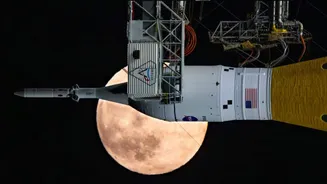
The Orion spacecraft will act as the primary command and living module for the Artemis II crew. Designed to support long-duration missions, Orion provides life support, radiation protection, and comfortable living quarters for astronauts. During the mission, the crew will live and work inside Orion while circumnavigating the Moon, testing out essential systems needed for the journey. The spacecraft's design also focuses on ensuring a safe return to Earth, providing a reliable re-entry system. This is an upgrade of previous modules used in past missions. Orion's capabilities and design are central to Artemis II's goals, as it will be carrying astronauts further into space than ever before. This includes ensuring crew safety and maximizing productivity during the mission's duration.
SLS: Powering Deep Space
The Space Launch System (SLS) rocket is a critical component of the Artemis program, serving as the deep-space powerhouse needed for this historic mission. The SLS is designed to provide the necessary thrust to send the Orion spacecraft, along with its crew, on their journey to the Moon. With its immense power, the SLS can propel large payloads far into space, setting the stage for human exploration beyond low Earth orbit. The rocket has a modular design, enabling it to be adapted for different missions in the Artemis program. The success of Artemis II greatly depends on SLS's successful launch and performance, which will be essential for reaching the Moon. The SLS has been built specifically for deep space travel, making the Artemis II mission a major step in space exploration.