







Mission Timeline Shift
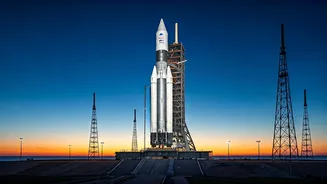
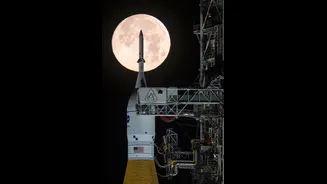
The much-anticipated Artemis II mission, designed to carry a crew of four astronauts on a journey around the Moon, has experienced a rescheduled launch.
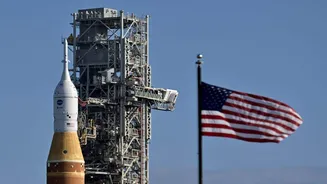
Originally slated for liftoff in February 2026, NASA has now officially moved the target to March 2026. This postponement is a direct consequence of observations made during a critical pre-launch procedure known as the Wet Dress Rehearsal (WDR). The WDR is an essential phase where engineers simulate the entire launch countdown, including fueling the rocket, to identify and rectify any potential problems before the actual mission. The delay grants the mission teams invaluable extra time to meticulously address the identified issues, thereby bolstering the safety and overall success prospects of this historic lunar endeavor.
Unpacking the WDR Findings
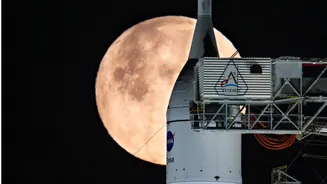
During the recent Wet Dress Rehearsal, a series of minor, yet significant, technical challenges surfaced, necessitating this revised launch schedule. A notable issue involved a liquid hydrogen leak detected at a crucial interface point within the Space Launch System (SLS) core stage. Addressing such leaks is paramount for mission integrity and astronaut safety, requiring careful recalibration and reinforcement of the affected systems. Beyond the hydrogen leak, the closeout operations for the Orion capsule, the vehicle that will house the astronauts, also consumed more time than initially allocated. Specifically, additional work was required on a valve located within the crew module's hatch. Furthermore, unpredictable cold weather conditions during the rehearsal led to intermittent audio dropouts and affected the performance of certain onboard cameras, underscoring the need for environmental resilience in the mission's systems.
Safety and Preparations
The delay is fundamentally rooted in NASA's unwavering commitment to crew safety. The agency is targeting March 2026 as the earliest viable launch window for Artemis II, with the precise date and time to be finalized once all identified issues are comprehensively resolved. This cautious approach ensures that astronauts Reid Wiseman, Victor Glover, Christina Koch, and Canadian Space Agency astronaut Jeremy Hansen embark on their mission with the highest level of confidence in their spacecraft's readiness. NASA recently communicated these developments and will be holding a press conference to discuss the initial results of the wet dress rehearsal in detail. This vital mission marks a significant step forward in humanity's return to the Moon.