




Artemis: Moon's New Frontier
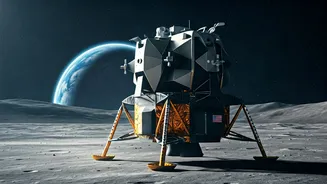
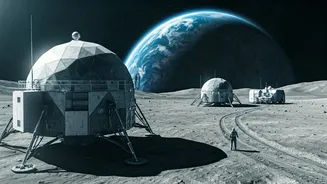
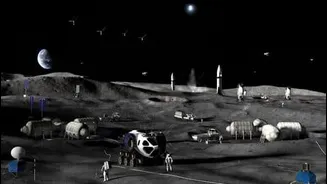
NASA's latest strategy heavily emphasizes lunar development, spearheaded by the Artemis program, with the ambitious goal of creating a semi-habitable base
on the Moon by 2032. This initiative involves a series of robotic missions designed to prepare the lunar surface, laying the essential groundwork for sustained human presence. While the Lunar Gateway station plans are currently on hold to redirect resources, the focus has shifted to directly enhancing lunar surface capabilities. Artemis 2 is set to mark a monumental return for astronauts to the Moon, the first in over fifty years, signifying a significant stride in our interplanetary endeavors. This concentrated effort on the Moon aims to establish a robust platform for scientific research and future deep space exploration.
Mars Exploration Advances
Beyond Earth's natural satellite, NASA is charting a course for Mars with an innovative approach to exploration. The agency is preparing to deploy Space Reactor-1 Freedom, a nuclear-powered vessel designed to transport a fleet of six advanced helicopters to the Red Planet. These robotic scouts will be instrumental in surveying Martian terrain, gathering crucial data, and identifying optimal locations for potential future human landings. This sophisticated mission aims to dramatically accelerate our understanding of Mars and significantly de-risk subsequent crewed expeditions to this intriguing world.
Orbital Commercialization
With the International Space Station (ISS) nearing the end of its operational life, NASA is looking towards a new era of space habitation. The agency is actively encouraging and planning for the integration of commercial space modules to ensure continuous human presence in orbit. This strategic shift aims to foster a thriving private sector in space, providing new platforms for research, tourism, and industrial activities. The goal is to maintain a seamless transition from the ISS to next-generation orbital facilities, demonstrating a commitment to sustained human activity in low Earth orbit through innovative public-private partnerships.