



Conserving Precious Power
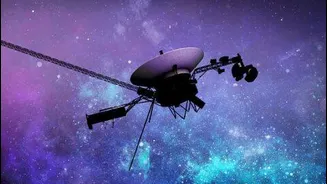
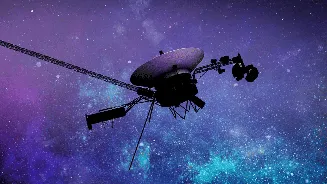
NASA has recently made a strategic decision to deactivate the Low-Energy Charged Particles experiment aboard the Voyager 1 spacecraft. This move is a direct
response to the spacecraft's diminishing power supply, stemming from its aging nuclear battery, which was originally launched in 1977. The primary objective behind this conservation effort is to prolong the spacecraft's operational lifespan, with the ambitious goal of maintaining contact and receiving data well into the 2030s. Every joule of energy is now meticulously managed, underscoring the dedication to extending our reach into the outer solar system and beyond. This deliberate shutdown is a testament to the innovative engineering and forward-thinking required for deep space missions where resources are finite but the scientific rewards are immense.
Voyager's Continued Journey
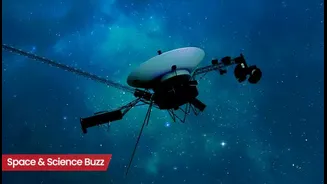
Despite the deactivation of one instrument, the intrepid Voyager 1 continues its monumental journey across the vast expanse of space, currently traversing distances exceeding 15 billion miles from Earth. The spacecraft remains actively engaged in scientific observation, utilizing its functional magnetic field sensors and plasma wave instruments to gather invaluable data about its interstellar surroundings. The immense distance now means that each communication signal, whether a command from Earth or a data transmission back, takes over 23 hours to complete its one-way voyage. This incredible feat of engineering and endurance highlights the enduring legacy of the Voyager program and its ongoing contribution to our understanding of the cosmos, even as the spacecraft ventures further into the unknown.
Prioritizing Mission Success
The overarching priority for NASA's mission control team is to ensure the continued functionality of Voyager 1's most critical systems. By carefully managing power resources and retiring less essential instruments, the agency aims to keep the lines of communication open with humanity's most distant emissary. This meticulous approach to power conservation is paramount to sustaining the flow of scientific data from the edge of our solar system and into interstellar space. The long-term vision is to preserve the spacecraft's ability to transmit its discoveries, allowing us to continue learning from our farthest explorer for as long as technically feasible, pushing the boundaries of human knowledge and exploration.