






Mastering Space Rendezvous
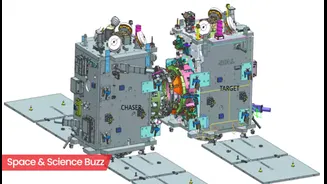
The Indian Space Research Organisation (ISRO) is actively preparing for two significant orbital docking experiments, designated SPADEX-2 and SPADEX-3.
These missions represent a crucial phase in ISRO's long-term vision to build and operate the Bharatiya Antariksha Station. By building upon the foundational docking demonstrations already achieved, these upcoming missions aim to rigorously test and refine the sophisticated capabilities essential for both future human space exploration and extended lunar missions. The SPADEX program is fundamentally important for ISRO to gain complete mastery over the intricate technologies involved in spacecraft rendezvous and docking. This includes the precise abilities to bring two independent spacecraft together, meticulously align them in the vacuum of space, and then securely connect them. Such skills are indispensable for a wide array of critical space operations, including the safe transfer of astronauts between vehicles, the vital process of refueling spacecraft in orbit, and the exchange of power. The successful validation of these advanced docking technologies will not only bolster the capabilities required for future human spaceflight ventures, such as the Gaganyaan crew module's integration with orbiting space stations, but also ensure the routine and safe execution of extended human presence in space.
Challenging Orbital Demos
SPADEX-2 is designed to tackle the complex challenge of docking and subsequent undocking of two spacecraft within a highly elliptical orbit. This specific orbital environment is deliberately chosen due to its relevance for future deep-space endeavors, including missions like Chandrayaan-4. A key objective of SPADEX-2 will be to demonstrate the transfer of samples between the two docked modules, a vital capability for bringing lunar resources or scientific samples back to Earth. In parallel, SPADEX-3 will focus on executing docking procedures within a circular orbit, which closely mimics the conditions found in low Earth orbit where many current space stations operate. This mission will be instrumental in showcasing the docking process between two pressurized modules, utilizing ISRO's indigenous Bharatiya Docking System (BDS). The BDS is a pivotal technology that will underpin the success of the Bharatiya Antariksha Station, facilitating crewed missions and enabling extended durations of stay in orbit for astronauts. ISRO has already proven basic docking functionalities in prior SPADEX missions, and these upcoming experiments signify a substantial progression towards mastering more complex docking scenarios.
Fostering Collaborative Innovation
The government is actively promoting a spirit of collaboration by opening avenues for academic institutions and national laboratories across India to contribute to these pioneering space missions. Opportunities for participation span a diverse range of critical areas, including the development of sophisticated payloads, the intricate design of complex algorithms, and the innovation of advanced experimental technologies. This collaborative approach is designed to harness the collective expertise within India's scientific community. It's noteworthy that Indian academic institutes have a proven track record of significant contributions to national space endeavors, having played instrumental roles in past missions such as the Aditya-L1 solar observatory. By actively encouraging greater participation from these institutions in initiatives like SPADEX, ISRO aims to further strengthen and accelerate the growth of India's burgeoning space ecosystem, fostering a robust environment for future space exploration and technological advancement.