





Mission and Purpose
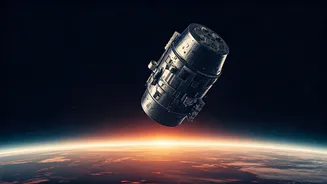
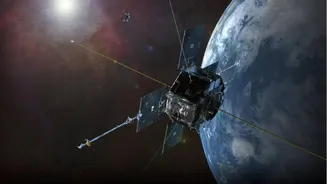
Launched in August 2012, the Van Allen Probe A was a vital component of NASA's mission to unravel the mysteries of Earth's radiation belts. These energetic
particle zones, crucial for protecting our planet, pose significant challenges to satellites and human spaceflight. For nearly seven years, exceeding its initial two-year operational lifespan, Probe A diligently studied these hazardous environments. Its scientific journey concluded in 2019 due to a depletion of its fuel reserves, marking the end of its active service after a distinguished tenure gathering invaluable data about the complex dynamics of our planet's magnetic shield.
Accelerated Descent Factors
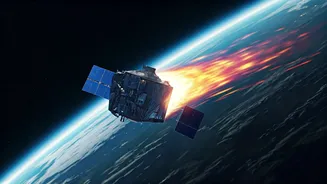
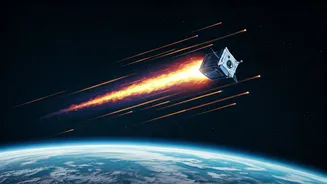
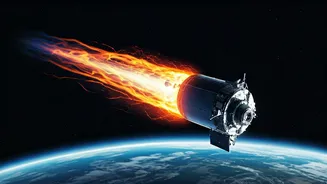
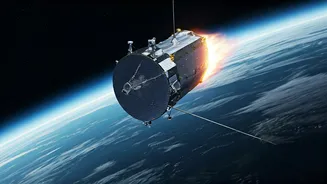
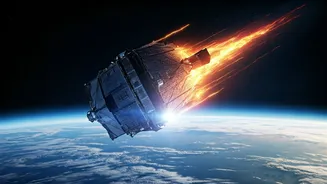
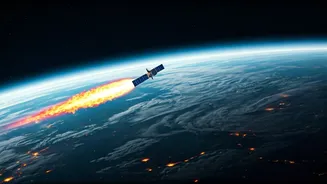
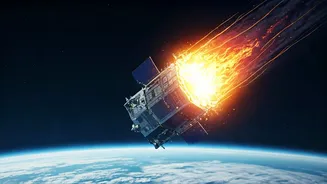
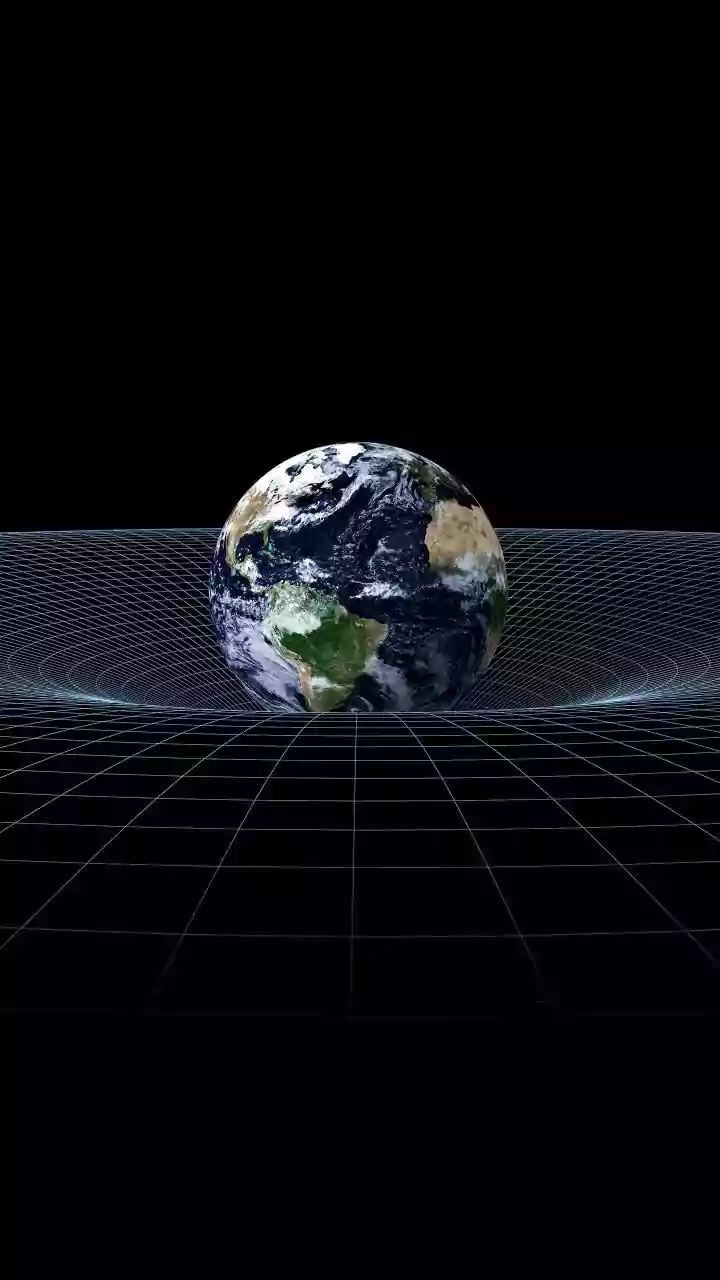
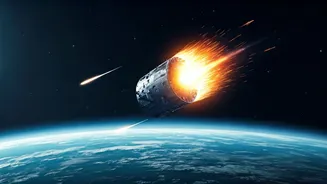
The satellite's current trajectory back to Earth is influenced by an intensified solar cycle. This increased solar activity has led to an expansion of Earth's upper atmosphere, creating more drag and thus hastening the Van Allen Probe A's descent. Originally anticipated to de-orbit around 2034, its return has been significantly expedited. The US Space Force is closely monitoring its path, aiming to provide a precise re-entry window, which is currently estimated between March 10-11, with a margin of error due to ongoing orbital fluctuations. As it pierces our atmosphere, NASA anticipates that the immense heat generated, exceeding 1,600°C, will cause the majority of the satellite to vaporize.
Assessing Re-entry Risk
Despite the imposing image of a 600kg NASA satellite impacting Earth, the likelihood of any harm to the public is remarkably low, estimated at just one in 4,200, or 0.02%. This minimal risk is attributed to several factors, including the vast expanse of Earth's oceans, which cover approximately 70% of the planet's surface, and the relatively low population density in potential impact zones. While certain robust components, such as the propellant tank or communication antennas, may survive the fiery re-entry, historical precedents demonstrate that any resulting debris typically disperses harmlessly over oceanic areas. Crucially, no public injuries have ever been reported from such satellite re-entries.
Scientific Legacy
The data collected by the Van Allen Probe A has profoundly advanced our understanding of how solar storms affect Earth's radiation belts. These insights are instrumental in developing more resilient electronics for spacecraft, enhancing the precision of global positioning systems (GPS), and informing future space exploration endeavors, such as the Artemis missions. Prior to its deactivation, NASA strategically adjusted its orbit to ensure a more controlled burn-up upon re-entry, adhering to international debris mitigation regulations. The agency's acceptance of the minor risk associated with Probe A's descent reflects confidence in their predictive models, especially relevant in an era of large satellite constellations like Starlink, where regulations for mega-satellites are still evolving.