





A Blistering Return
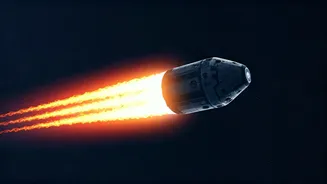
Prepare for an astronomical spectacle as NASA's Artemis II mission gears up to make history with an unprecedented lunar re-entry. The Orion spacecraft
is scheduled to plunge back towards Earth at a mind-boggling velocity of nearly 40,000 kilometers per hour. This speed is set to become the fastest achieved by any crewed spacecraft during its return, eclipsing all previous records. This thrilling descent will culminate in a splashdown in the vast Pacific Ocean, pushing the limits of Orion's resilience against extreme heat and immense gravitational forces. The mission isn't just about reaching the Moon; it's also about mastering the perilous journey back, a crucial step for broader space exploration ambitions.
Heat Shield's Fiery Role
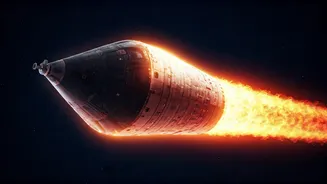
During its dramatic atmospheric entry, the Orion spacecraft will face temperatures soaring close to a scorching 2,800 degrees Celsius. This intense heat is generated as the spacecraft compresses the air in front of it, creating a superheated plasma sheath. This plasma is so extreme that it temporarily blocks radio signals, leading to a brief but critical communication blackout with ground control. To safeguard its astronaut occupants from this inferno, Orion is equipped with a sophisticated heat shield. This advanced shield is designed to intentionally ablate, meaning layers of its material will burn away, carrying the immense heat away from the spacecraft. This incredible feat of engineering is fundamental to ensuring crew safety and is a vital demonstration of technology for future lunar landings and even Mars missions under NASA's ambitious Artemis program.