








Factory-Built Modules
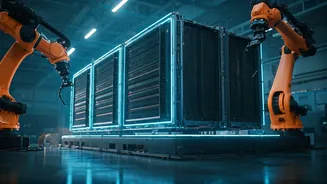
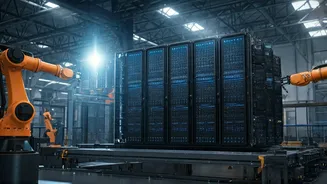
Amazon is pioneering a novel construction strategy known as 'Project Houdini,' which centers on manufacturing key data center sections, such as entire
server rooms, off-site in controlled factory environments. This departure from traditional on-site assembly allows for greater precision and efficiency. By prefabricating these critical modules, Amazon aims to dramatically reduce the time required to establish new data center facilities. This strategic shift is particularly vital in keeping pace with the insatiable and rapidly expanding demand for computing power driven by artificial intelligence applications. The factory setting ensures consistent quality and allows for parallel construction processes, ultimately leading to faster deployment of much-needed infrastructure for cutting-edge AI technologies.
Accelerated Deployment
The modular approach of Project Houdini offers a significant advantage by decoupling site preparation from the construction of data center components. This means that while groundwork and site development are being carried out at the physical location, the actual server rooms and other essential sections are simultaneously being built and assembled in a manufacturing facility. This concurrent workflow dramatically shortens the overall project timeline and reduces the need for extensive on-site labor. Amazon plans to roll out this innovative method initially at select locations, working closely with partners to optimize the production process. Should this project prove successful, it has the potential to fundamentally alter how the entire industry approaches the construction of future-proof technological facilities.
Future Challenges
While Project Houdini promises to revolutionize data center deployment speed, the immense power requirements for these facilities remain a significant hurdle. As these advanced centers, built with pre-assembled modules, come online, ensuring an adequate and sustainable power supply will be a critical challenge that the industry must address. The ambition to rapidly scale AI infrastructure through modular construction necessitates concurrent innovation in power generation and distribution. Overcoming this energy demand challenge will be paramount for the long-term success and scalability of such forward-thinking construction methodologies, ensuring that the speed gained in assembly is not bottlenecked by power availability.