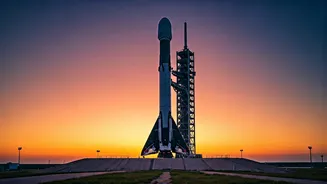








Lunar Leap Over Mars
SpaceX has decided to put its ambitious plans for an uncrewed Mars mission on hold, a venture that was initially scheduled to take flight in late 2026.
This significant pivot in strategy means the company is now redirecting its formidable resources and development focus towards fulfilling NASA's lunar aspirations. The primary objective has become achieving a Starship landing on the Moon, with a targeted date of March 2027. This decision represents a notable departure from the long-standing vision of reaching the Red Planet, acknowledging that current technological readiness and partnership commitments necessitate a phased approach, with the Moon serving as the immediate frontier for advanced Starship operations.
Artemis Program's Priority
The decision to pause the Mars mission is intrinsically linked to NASA's overarching Artemis program, which aims to establish a sustained human presence on the Moon. SpaceX is a critical partner in this endeavor, tasked with developing the lunar lander capabilities of its Starship vehicle. The stringent timelines and ambitious goals of the Artemis program, which include not just landings but also long-term habitation and exploration, have necessitated SpaceX concentrating its immediate efforts on ensuring Starship's readiness for these lunar operations. This collaboration underscores the interconnectedness of space exploration goals, where progress in one area can accelerate or influence advancements in another, making the Moon the current focal point for both NASA and SpaceX.
Mars Dreams on Hold
Elon Musk, the driving force behind SpaceX, has historically been vocal about the long-term vision of colonizing Mars. However, the timelines for this monumental task have seen several adjustments. The most recent iteration of the Mars mission plan involved deploying five Starships by the end of 2026. Yet, Musk himself deemed this plan overly ambitious and unlikely to succeed given Starship's current developmental stage. He candidly referred to it as a "distraction" due to the low probability of successful execution. This candid assessment, coupled with the pressing demands of the NASA partnership for lunar missions, has led to the official postponement of the Mars endeavors, allowing SpaceX to concentrate on perfecting Starship's capabilities in a more immediate and achievable context.
Starship's Lunar Stepping Stone
The Starship vehicle is designed to be a revolutionary interplanetary transport system, capable of carrying massive payloads. However, for missions to Mars, a critical prerequisite is the ability to refuel the spacecraft in orbit. This complex maneuver requires a carefully orchestrated sequence of launches and successful orbital rendezvous. Before tackling the immense challenge of Mars, SpaceX must first demonstrate the reliability and efficiency of Starship for lunar missions. Successfully executing NASA's Artemis program, which involves landing on the Moon and likely multiple resupply and crewed missions, will serve as a vital proving ground for Starship's advanced capabilities, including its refueling systems. Only after these lunar objectives are met and the technology is sufficiently mature will SpaceX be able to confidently turn its attention back to its grander Martian ambitions.