




A Cool Solution
In response to escalating global temperatures and growing concerns about water shortages, a brilliant team of researchers from the University of Sydney,
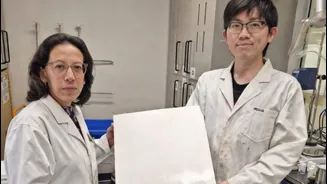
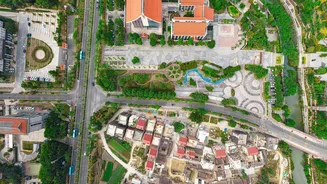
led by Chiara Neto and Ming Chiu, has pioneered an extraordinary nanoengineered paint. This cutting-edge coating is meticulously designed to reflect the vast majority of incoming solar radiation while simultaneously minimizing the amount of heat absorbed by structures. The inspiration for this remarkable innovation stemmed from observing the 'urban heat island' phenomenon, where dense urban environments experience significantly higher temperatures due to the absorption of solar energy by materials like concrete and rooftops. This led to the establishment of Dewpoint Innovations in 2022, a dynamic start-up dedicated to reimagining infrastructure design for a more climate-resilient future. The founders are convinced that if urban rooftops could efficiently reflect heat and also collect water, they could become instrumental in addressing critical climate challenges. As Chiu, now the CTO of Dewpoint Innovations, aptly put it, their paint is set to drastically reduce the solar heat load impacting cities.
Radiative Cooling Power
The secret behind this remarkable paint lies in its sophisticated nanomaterials, which employ a sophisticated technique known as passive radiative cooling. This advanced method works by reflecting nearly all of the sun's energy away from the surface and also actively emitting thermal radiation back into the atmosphere. The combined effect is a surface that remains considerably cooler than the surrounding ambient air, all without consuming any electricity. Extensive testing has validated its efficacy; in a comprehensive six-month outdoor trial conducted in 2025, Dewpoint's specialized coating demonstrated an astonishing solar reflectance of up to 96%. This exceptional reflectivity directly translated into less heat absorption, causing roof surfaces to remain as much as six degrees Celsius cooler than the ambient air. Consequently, the amount of heat transferred into buildings was significantly reduced, contributing to more comfortable indoor environments and lower cooling demands.
Proven Performance Data
The effectiveness of this innovative paint has been further underscored by real-world field trials. During a focused three-month assessment conducted in Sydney during late 2023, Dewpoint's specially formulated roof paint maintained temperatures up to 30 degrees Celsius cooler compared to a conventional dark-colored roof. This significant temperature difference yielded tangible energy savings, estimated to result in a reduction of cooling energy consumption in households by as much as 34%. Experts in the field, such as Baohua Jia, a nanotech specialist at RMIT University, have lauded the potential of Dewpoint's roof coating, describing it as a 'tangible tool for climate adaptation in dense urban areas.' The paint's ability to directly mitigate the heat island effect and reduce energy dependency makes it a highly promising development for urban sustainability initiatives.
Water Harvesting Capability
Beyond its impressive cooling capabilities, this revolutionary paint possesses a secondary, yet equally significant, function: the capacity to harvest water directly from the atmosphere. The principle behind this feature is straightforward: a cooler surface naturally promotes the condensation of moisture present in the air, much like how water droplets form on the exterior of a cold beverage glass. In initial experimental phases, Dewpoint's innovative system proved adept at collecting substantial amounts of water. Specifically, a roof area measuring 200 square meters was able to yield an impressive 74 liters of water per day through this condensation process. While it's acknowledged that this collected water cannot entirely substitute a household's complete water supply, it can effectively serve as a valuable supplemental source. Perzaan Mehta, the CEO of Dewpoint, clarified that it 'will help reduce the burden, but it's not the miracle cure.' The company has identified that a minimum relative humidity level of approximately 70% is crucial for the water collection mechanism to operate with optimal efficiency. This environmental condition makes the technology particularly well-suited for humid, coastal, and tropical regions, such as Singapore or the vast Amazon Basin in South America.