




Robotic Tennis Prodigy
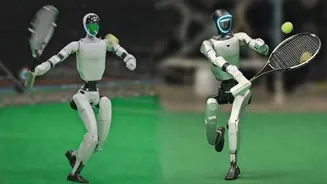
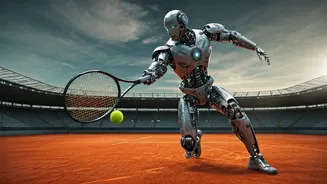
Scientists have achieved a significant breakthrough by teaching a humanoid robot, the Unitree G1, to play tennis. Astonishingly, this feat was accomplished
despite the robot learning from human motion data that was not perfectly accurate. This novel technique, dubbed LATENT, enabled the robot to acquire fundamental tennis skills like executing forehand and backhand strokes with remarkable proficiency. The approach addresses a common challenge in robotics: the scarcity of pristine, perfectly curated training data. By adapting existing methods, the research team has opened new avenues for AI in physical activities. The success here is not just about playing a sport; it's about creating a more adaptable and versatile AI that can learn from real-world, often messy, information. This development signifies a leap forward in human-robot interaction and learning capabilities.
Learning from Imperfection
The core of this robotic tennis training involved transforming five hours of real human tennis movements into a digestible and simplified format for the robot. The researchers cleverly employed simulations that exposed the robot to a variety of ball speeds and environmental conditions. This simulated practice was crucial, allowing the AI to develop the resilience and adaptability needed to handle the unpredictable nature of a live tennis match. The goal was to move beyond rigid, perfect movements and prepare the robot for the dynamic, less-than-ideal scenarios encountered in actual play. This method highlights an intelligent way to bridge the gap between theoretical learning and practical application, especially when the source material is inherently flawed or incomplete. The simulations acted as a bridge, ensuring the robot could generalize its learned skills effectively.
Impressive Performance
The results of this innovative training approach are quite striking. In simulation tests, the robot demonstrated exceptional accuracy, successfully executing 96% of its forehand shots. Furthermore, it proved capable of keeping pace with human players during rallies, showcasing rapid reaction times measured in milliseconds. This high level of performance, achieved with imperfect initial data, underscores the efficacy of the LATENT method. The potential applications extend far beyond the tennis court; this approach could be instrumental in teaching robots other sports such as football or badminton. It's particularly valuable in situations where obtaining flawless training data is impractical or impossible, making AI learning more accessible and applicable to a wider range of real-world tasks. The researchers have also made their work open source, encouraging further development and collaboration in the field.