




Bridging Light and Silicon
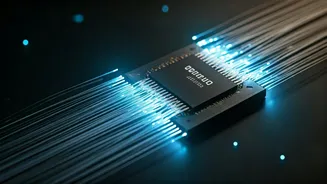
A remarkable advancement is emerging from collaborative efforts across Asia, presenting a minuscule yet powerful chip that ingeniously combines optical
(photonic) and electronic components into a single, streamlined unit. This fusion is particularly significant for the immense demands of modern data centers and the rapidly evolving field of artificial intelligence. Traditionally, the conversion between electrical signals and light signals for data transmission has been a bottleneck, requiring separate components that consume considerable energy and introduce latency. By bringing these optical conversion processes much closer to the actual processors, this new chip design significantly minimizes the distance data needs to travel, thereby reducing both the time it takes for information to move and the amount of energy expended in the process. This is a monumental achievement, considering that moving data within data centers can account for as much as 40% of their total power consumption. The implications for efficiency and performance are therefore profound, offering a glimpse into a future of more capable and sustainable computing infrastructure.
Impact on AI and Data Centers
The real-world impact of this innovative chip is already being explored by industry leaders. Prominent artificial intelligence companies are actively engaged in testing this novel technology, signifying its potential to address some of the most pressing challenges in AI development and deployment. The computational power required for training and running sophisticated AI models is immense, and any improvement in data transfer speed and energy efficiency can translate into significant operational benefits. Furthermore, the energy savings achieved by reducing data movement overhead are crucial for the sustainability of large-scale data center operations. As these centers consume vast amounts of electricity, optimizing any aspect of their power usage, especially for data handling, becomes a critical objective. The ongoing trials with major AI players suggest a strong belief in the chip's capability to enhance performance and reduce operational costs, potentially accelerating the adoption of more advanced AI solutions and leading to more efficient, powerful, and environmentally conscious data processing capabilities across the board.