







Rapid Fire Deployment
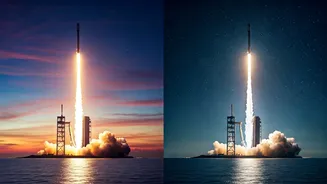
SpaceX recently demonstrated an astonishing level of operational efficiency by successfully deploying two distinct sets of Starlink satellites in a compressed
timeframe of just 20 hours. The initial launch, sending 29 internet relay units belonging to Starlink group 10-24, commenced from Cape Canaveral Space Force Station in Florida in the early hours of Tuesday. This was swiftly followed by a second launch later the same day from Vandenberg Space Force Base in California, which carried another 25 Starlink satellites, designated as group 17-27. This rapid-fire approach underscores the company's commitment to accelerating the growth of its satellite internet infrastructure, ensuring quicker expansion of its services.
Reusable Rockets Land
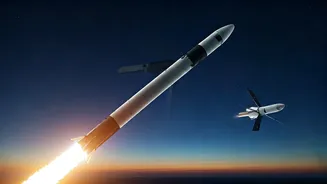
Following the successful deployment of each satellite payload, the reusable Falcon 9 rockets that carried them executed textbook landings, underscoring SpaceX's advancements in spaceflight technology. Approximately one hour after each launch, the upper stage of the Falcon 9 successfully delivered its cargo of Starlink satellites into their intended low Earth orbit paths, setting them on course to join the burgeoning constellation. Critically, the first stage boosters of both missions returned to Earth, a testament to their reusability. Booster B1080 made a pinpoint landing on the droneship 'Just Read the Instructions' in the Atlantic Ocean, marking its 26th successful flight. Concurrently, Booster 1082 touched down on the 'Of Course I Still Love You' droneship in the Pacific Ocean, achieving its 21st reuse. This dual recovery highlights the economic and operational advantages of their reusable rocket program.
Constellation Expansion Accelerates
These consecutive launches have significantly boosted the number of Starlink satellites currently operational in orbit, pushing the total beyond an impressive 10,200 units. The second launch, originating from Vandenberg, marked SpaceX's 46th mission of the year and contributed to the company's extensive history of 629 Falcon 9 launches since 2010. This remarkable 'doubleheader' event is a clear indicator of SpaceX's unwavering dedication to enhancing its global internet coverage through the Starlink project, pushing the boundaries of satellite internet deployment and accessibility worldwide.