




Waste Management Aboard Orion
During the Artemis 2 mission, which involved a swift 10-day journey around the Moon, the astronauts on the Orion spacecraft utilized a distinct method
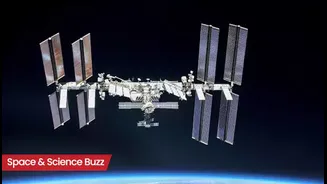
for handling human waste. Unlike the sophisticated recycling systems found on the International Space Station, the Artemis 2 crew opted to freeze their waste, comprising both liquid and solid bodily excretions, before releasing it into the vacuum of space. This approach was specifically designed for the mission's shorter duration, prioritizing a straightforward disposal process. All waste was meticulously sealed within specialized containers to prevent any leakage, ensuring the integrity of the spacecraft's environment. The extreme cold of space, reaching temperatures as low as -100 degrees Celsius, played a crucial role in this process, leading to the sublimation of liquids and the dehydration and sterilization of solid waste.
Jettisoning Waste Safely
The careful jettisoning of this frozen waste was a critical step in the Artemis 2 mission's waste management protocol. The crew was tasked with releasing these waste containers in a manner that would not pose any risk to the spacecraft itself or create hazardous space debris. This controlled release ensured that the frozen material would drift away safely, minimizing any potential interference with Orion's trajectory or systems. While this method proved effective for the short 10-day Artemis 2 mission, NASA acknowledges that it is not a sustainable solution for future, more extended voyages. The agency is actively developing advanced recycling and waste management technologies to support longer-duration missions, such as those planned for journeys to Mars, which will require more complex and resource-efficient systems.