





Powering the Future
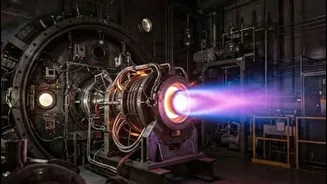
In a significant stride towards enabling more ambitious space exploration, NASA has successfully conducted a crucial test of a 120-kilowatt MagnetoplasmaDynamic
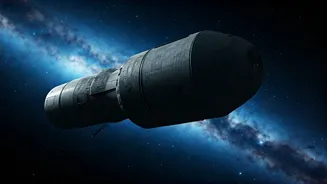
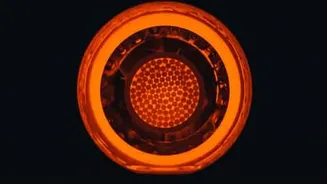
(MPD) thruster. This advanced propulsion system, powered by lithium, was put through its paces at the agency's Jet Propulsion Laboratory. The 120kW output represents a notable domestic power milestone achieved in the United States for this type of technology. The implications are profound, particularly for NASA's long-term goals, such as facilitating more rapid transit to Mars and allowing for the transport of substantially larger payloads. This successful test signifies a critical step in developing the robust propulsion systems necessary for deep space voyages, moving beyond current capabilities and opening up new possibilities for scientific missions and human exploration.
Mars Mission Advantage
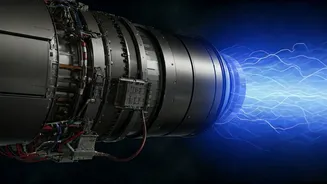
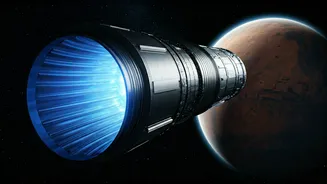
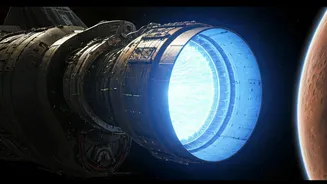
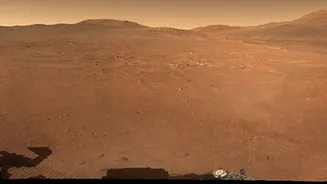
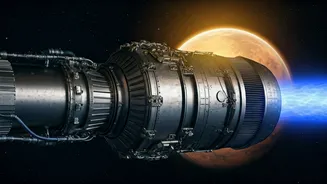
The MPD thruster operates by utilizing electromagnetic forces to accelerate ionized lithium, transforming it into a high-velocity plasma stream that propels the spacecraft. This method is exceptionally efficient for imparting momentum, making it ideal for moving significant masses, a requirement that aligns perfectly with NASA's 'Moon to Mars' initiative. The ability to generate such high thrust levels could drastically reduce travel times to Mars, a critical factor for human missions where exposure to the harsh space environment needs to be minimized. Furthermore, the increased payload capacity means astronauts can carry more essential supplies, scientific equipment, and habitat modules, enhancing the feasibility and scope of Martian exploration and potential colonization efforts. This technology is poised to be a game-changer in making the dream of regular, efficient travel to the Red Planet a tangible reality.
Beyond Current Limits
While this 120kW test marks a substantial advancement, NASA acknowledges that the demands of extended deep space missions, especially those involving sustained travel or operations far from the Sun, will require even greater power outputs. The challenges of powering propulsion systems in the vastness of space, where solar energy diminishes significantly, are considerable. Consequently, the agency is already actively exploring the development of nuclear-powered systems. These could provide the continuous and abundant energy required to sustain high-power thrusters like the MPD system for much longer durations and at greater distances. This forward-looking approach underscores NASA's commitment to pushing the boundaries of space propulsion technology, ensuring that future explorers have the tools they need to venture further into the cosmos.