





A Giant Leap Again
Artemis II represents more than just a spaceflight; it's a reawakening of human ambition in space. It is the first crewed flight to venture beyond Earth's
orbit since the Apollo 17 mission in 1972. This mission will carry a crew of astronauts around the Moon in the Orion spacecraft, testing the spacecraft's life support systems and other critical technologies. Unlike Apollo, which focused on brief lunar landings, Artemis aims for a long-term presence, with plans for a lunar base and, eventually, missions to Mars. The mission also highlights international collaboration, with contributions from various space agencies worldwide, emphasizing the global nature of this grand project.
Orion's Maiden Voyage
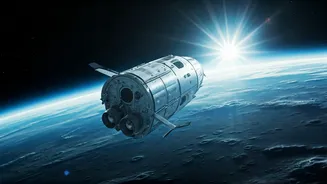
The Orion spacecraft will be the central element of the Artemis II mission. Orion has already undergone an uncrewed test flight, Artemis I, that validated many of its systems, including the heat shield's ability to withstand the extreme temperatures of re-entry. Artemis II will take the crew on a 10-day mission, a lunar flyby. During this flight, the astronauts will evaluate the spacecraft's life support systems, communication systems, and overall performance in the deep space environment. The mission's success is crucial for establishing the reliability of Orion for future, extended lunar missions, laying the groundwork for more ambitious objectives such as constructing a lunar gateway and a permanent lunar base.
Crew Configuration and Training
The Artemis II mission is crewed by four astronauts. The selection of these astronauts represents a significant moment, with the crew chosen from a diverse pool of experienced space travelers. The crew will undergo rigorous training, simulating various mission scenarios, including potential emergencies, to ensure they are prepared for the challenges of deep space travel. Training will involve extensive use of virtual reality and other simulation technologies. The mission crew's performance will be critical to evaluating human capabilities in deep space and informing the design of future spacecraft and exploration strategies.
Mission Objectives and Goals
Artemis II is designed with specific objectives aimed at assessing the overall performance of the integrated mission systems. It involves the flight of the Orion spacecraft, powered by the European Service Module, with the key goals of testing essential life support systems and the spacecraft's ability to navigate and operate safely during deep space missions. The mission's success relies on the crew's ability to manage the spacecraft throughout the journey. It will also gather valuable data, providing information critical for the development of future missions that will extend human presence beyond Earth orbit. The objectives include an in-depth evaluation of the spacecraft's communication systems and the ability to maintain continuous contact with mission control.
Preparing for Mars
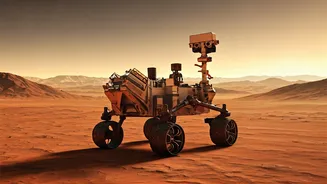
While the immediate goal is the Moon, Artemis II is viewed as a foundational step toward more ambitious goals. This mission is part of NASA's grand vision for exploring Mars. It will test the technologies and strategies necessary to support long-duration space missions. The data gathered from Artemis II will inform the design of future missions and support the development of life support systems, radiation shielding, and other technologies critical for a human mission to Mars. Artemis II is paving the path for interplanetary exploration, bringing humanity closer to the dream of colonizing other planets and expanding human presence in the solar system.