






The Brain's Secret Cleaner
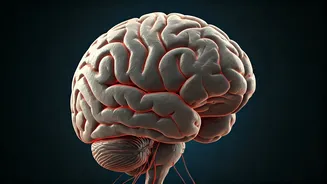
Think of your brain as a bustling city that accumulates waste throughout the day. Just as a city needs its nighttime cleaning crews to function smoothly,
your brain relies on a sophisticated biological process to clear out metabolic byproducts. When you're awake and active, your brain is engaged in complex tasks like processing information, making decisions, and navigating your environment. This continuous activity generates waste materials, similar to the exhaust from a busy factory. However, your brain can't perform this essential cleanup operation while it's actively engaged in these demanding cognitive functions. It's akin to trying to conduct a major renovation project in a building while it's still fully occupied and operating; it simply isn't feasible. Therefore, the brain must wait for a period of rest and inactivity to effectively carry out its crucial maintenance. This highlights that sleep is not merely a passive state of repose but a dynamically active and essential period for the brain's physiological health and restoration, far from just being a luxury.
Cellular Shrinkage and Fluid Flow
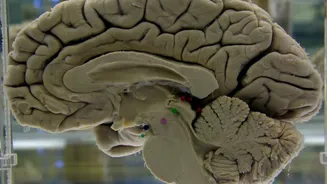
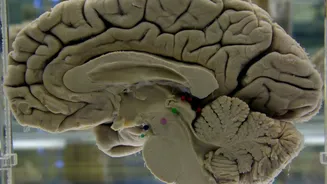
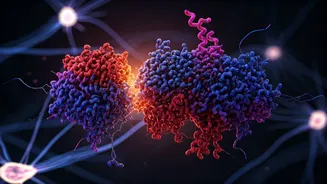
During deep, slow-wave sleep, a remarkable transformation occurs within your brain. Neuroscientists refer to this process as the glymphatic system, which acts as a highly efficient waste removal service. At the onset of this sleep stage, brain cells, or neurons, undergo a physical contraction. Astonishingly, these cells can shrink by as much as 50 percent. This shrinkage isn't just a minor change; it has a profound impact by significantly widening the microscopic spaces between the brain cells. Once these intercellular channels are expanded, cerebrospinal fluid, the clear liquid that bathes and protects the brain and spinal cord, begins to flow more freely. This enhanced fluid circulation acts as a powerful flushing mechanism, actively sweeping through the brain tissue. Its primary function is to carry away the metabolic waste products that have accumulated during your waking hours. Among the key toxins cleared are beta-amyloid proteins, sticky compounds notoriously associated with the development of cognitive decline and Alzheimer's disease. This biological rinsing process is vital for maintaining neuronal health and preventing the buildup of harmful substances that can impair brain function over time.
The Danger of Hustle Culture
In contemporary society, there's a prevalent 'hustle culture' that often glorifies sacrificing sleep for productivity. This mindset leads many to view sleep as a negotiable commodity, something to be postponed or minimized in favor of more 'productive' activities. Phrases like 'I'll sleep when I'm dead' have become a common, yet concerning, mantra. However, consistently neglecting the brain's intrinsic cleaning mechanism, the glymphatic system, is a hazardous practice. We seem to have lost sight of the fact that rest is not a sign of weakness or a failure to be productive, but rather a fundamental biological necessity. By consistently depriving ourselves of adequate sleep, we are essentially preventing the brain's janitorial crew from performing their vital work. This leads to the accumulation of toxins, such as beta-amyloid, which can have detrimental long-term effects on cognitive function, potentially increasing the risk of neurodegenerative diseases. The immediate consequence, often felt the next day, is a general feeling of malaise and reduced mental clarity, a direct result of the brain's inability to properly clear itself.