




AI as Managerial Support
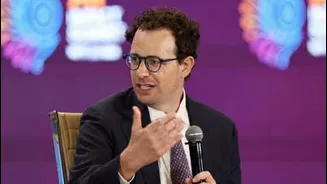
A significant shift in organizational structure is being championed by prominent tech figures Jack Dorsey, co-founder of Twitter, and Roelof Botha, a partner
at Sequoia Capital. Their radical proposition involves leveraging artificial intelligence to assume responsibilities typically handled by middle managers. This concept gains traction in light of recent strategic decisions by Block, Dorsey's current company, which is reportedly implementing substantial staff reductions with an eye toward enhancing operational efficiency and speed through AI integration. The core idea is to reimagine how teams are organized and how information flows within a company, aiming for a more agile and responsive operational model, especially during periods of economic uncertainty. This approach seeks to redefine the traditional hierarchy by empowering technology to manage workflows and facilitate communication.
Block's New Roles
In response to evolving business needs and the potential of AI, Block is reportedly restructuring its workforce by introducing three distinct role categories. The first comprises 'individual contributors' who will directly utilize AI tools to expedite decision-making processes and execute tasks with increased velocity. Secondly, 'directly responsible individuals' are envisioned to tackle more complex challenges, drawing on AI assistance to develop solutions and drive projects forward. Finally, the 'player-coach' role merges product development with team management, indicating a hybrid approach where individuals contribute hands-on while also guiding and overseeing others. Jack Dorsey's conviction is that this redefined structure will foster a more adaptable and potent organizational framework, enabling companies to navigate difficult economic climates with greater resilience and effectiveness.