







A New Era Dawns
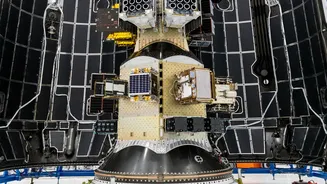
Bengaluru's own GalaxEye has just achieved a monumental feat by sending its maiden commercial satellite, named Drishti, into orbit aboard a SpaceX Falcon-9
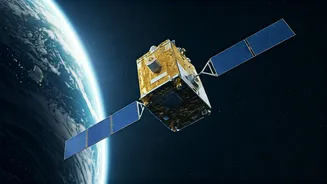
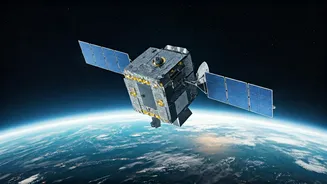
rocket. This launch isn't just another entry into space; it represents a significant leap in Earth observation technology, positioning India as a formidable player in the global space industry. Drishti, weighing in at a substantial 190kg, proudly stands as the largest privately developed Earth observation satellite from India. What truly sets it apart, earning it the title of the 'world's first OptoSAR satellite,' is its groundbreaking integration of Electro-Optical (EO) and Synthetic Aperture Radar (SAR) sensors onto a single, operational platform. This pioneering fusion unlocks a remarkable ability to capture imagery regardless of external conditions, operating seamlessly through clouds, darkness, and adverse weather, while also delivering conventional optical views.
Dual Vision, Enhanced Insight
The true power of Drishti lies in its dual-sensor capability, offering a comprehensive view of our planet. While the SAR sensors can penetrate cloud cover and operate in complete darkness, the EO sensors provide detailed visual information. By intelligently synchronizing and fusing these two distinct data streams, GalaxEye empowers ground users with imagery that is not only richer but significantly more reliable and actionable. This advanced capability is poised to transform operations across a wide array of sectors. Think of enhanced border surveillance and defense monitoring, where persistent observation is key. It's also invaluable for disaster response, offering clear views for damage assessment and relief coordination. Furthermore, its applications extend to precision agriculture, aiding in crop health monitoring, and infrastructure planning, enabling detailed site analysis. Even the insurance industry stands to benefit from more accurate assessments of damages.
Onboard Intelligence, Swift Action
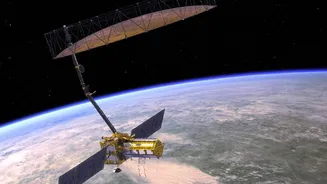
Beyond its imaging prowess, Drishti is equipped with cutting-edge artificial intelligence processing, powered by NVIDIA's advanced Jetson Orin computing platform. This sophisticated onboard intelligence allows for a significant portion of data processing to occur directly within the satellite itself. This distributed processing capability drastically reduces the time and latency involved in transforming raw satellite imagery into meaningful, actionable insights for users on the ground. The satellite boasts an impressive resolution of 1.5 meters, meaning it can capture fine details from its vantage point. Combined with its ability to revisit locations globally every seven to 10 days, Drishti ensures timely and relevant data acquisition. Physically, the spacecraft is roughly the size of a small refrigerator, yet it features a surprisingly large deployable antenna spanning about 3.5 meters, crucial for its powerful data transmission.
Future Constellation Planned
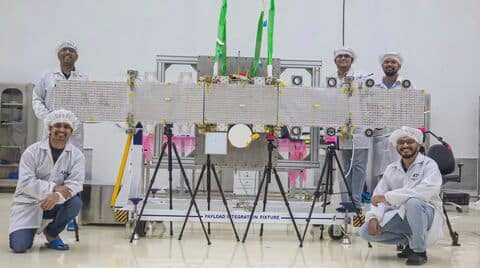
GalaxEye's ambition doesn't stop with Drishti. The company has been diligently preparing for this launch, having previously conducted extensive testing of its imaging systems through nearly 500 aerial sorties using drones and Cessna aircraft. This meticulous validation process paved the way for Drishti's successful deployment. Following this significant milestone, GalaxEye has set its sights on expanding its capabilities significantly. The startup plans to develop a larger constellation comprising eight to 12 satellites over the next four years. This future constellation is envisioned to deliver even sharper imagery, further pushing the boundaries of what's possible in Earth observation and solidifying India's leadership in this critical technological domain.