




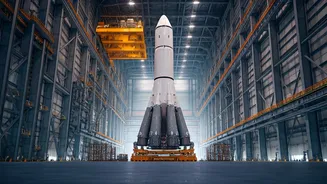
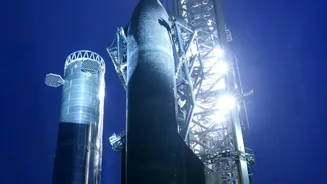
V3's Maiden Flight
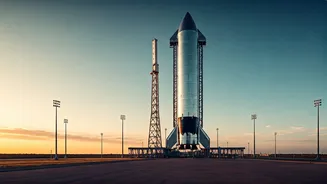
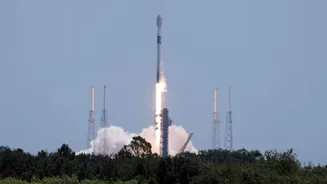
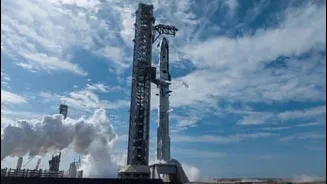
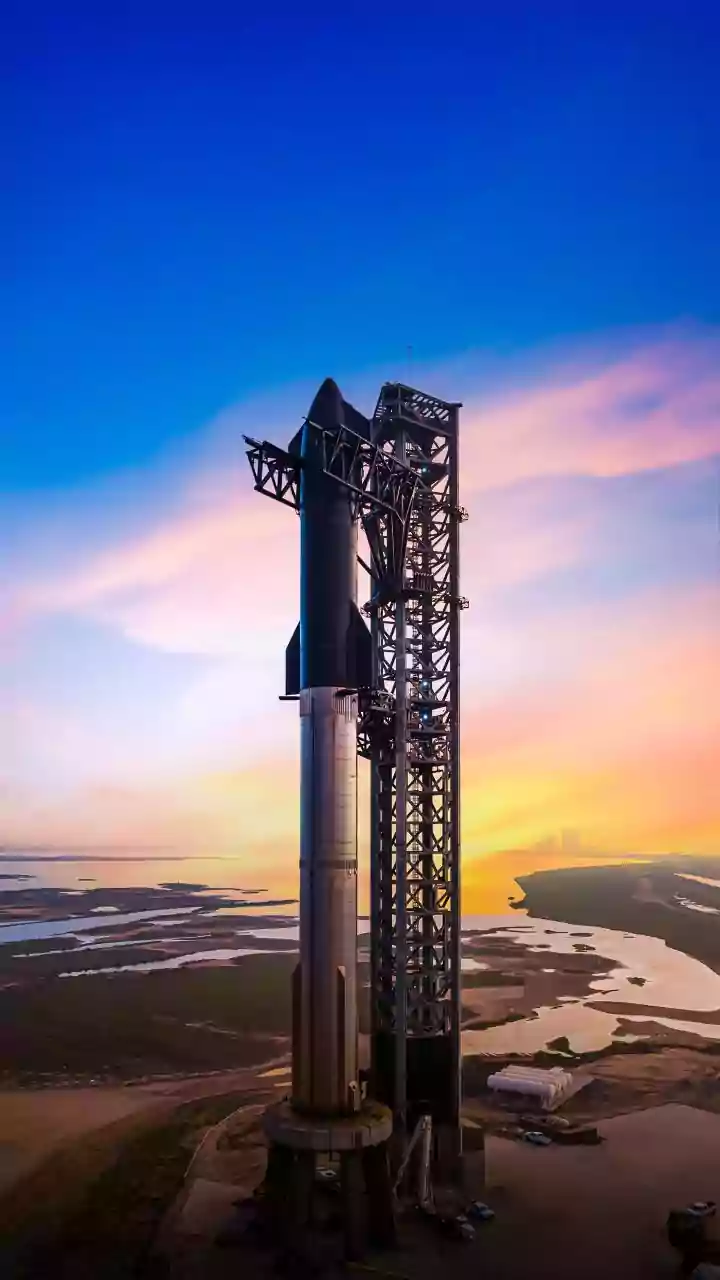
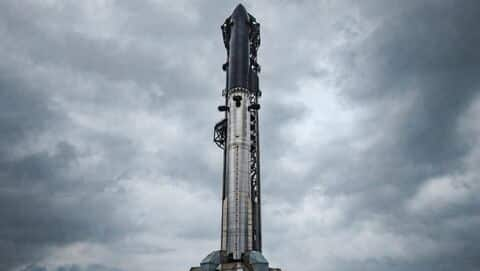
On May 19, 2026, a new era in spaceflight is set to commence from Starbase, Texas, with the inaugural launch of SpaceX's Starship V3. This marks the 12th
overall flight for the Starship program, but it's particularly significant as it introduces a completely redesigned V3 model. This upgraded rocket is being meticulously engineered with ambitious future missions to the Moon and Mars as its primary objective. The launch window is scheduled to open at 6:30 PM EDT, and the entire event will be broadcast live, allowing enthusiasts worldwide to witness this pivotal moment in space exploration history as the V3 takes to the skies for the very first time.
Key Upgrades Revealed
The Starship V3 boasts several critical enhancements designed to improve performance and reliability. Notably, it features enlarged grid fins, which are essential for achieving more controlled and stable landings, a significant challenge in rocket recovery. A 'hot staging' system has also been incorporated, a technique where the upper stage engines ignite before the lower stage fully separates, providing a powerful boost. Furthermore, a revamped fuel system is now capable of firing all 33 Raptor engines simultaneously, optimizing thrust from the outset. The upper stage of the rocket has also undergone significant modifications to boost its efficiency and agility during flight, making it more adaptable for diverse mission profiles and the rigors of deep space travel.
Mission Objectives
During this debut mission, SpaceX aims to rigorously test and validate the new advancements present in the V3. The flight plan includes carrying dummy Starlink satellites, allowing engineers to assess the rocket's trajectory and performance under a realistic payload. A key focus will be on monitoring and analyzing data from the heat shield imaging systems. This information is vital for understanding how the Starship withstands atmospheric re-entry, a crucial step in developing a fully reusable spacecraft. Successfully validating these technologies is paramount for SpaceX's long-term vision of frequent and economical access to space, ultimately supporting their ambitious lunar and Martian exploration goals.